In a maintenance hall in Bümpliz, repairs to concrete surfaces that are heavily used in everyday life were a priority. Moisture, wear and tear, and daily use all take their toll on the concrete over the years. If damage becomes visible, renovation is needed that not only covers the surface but also protects the structure again.
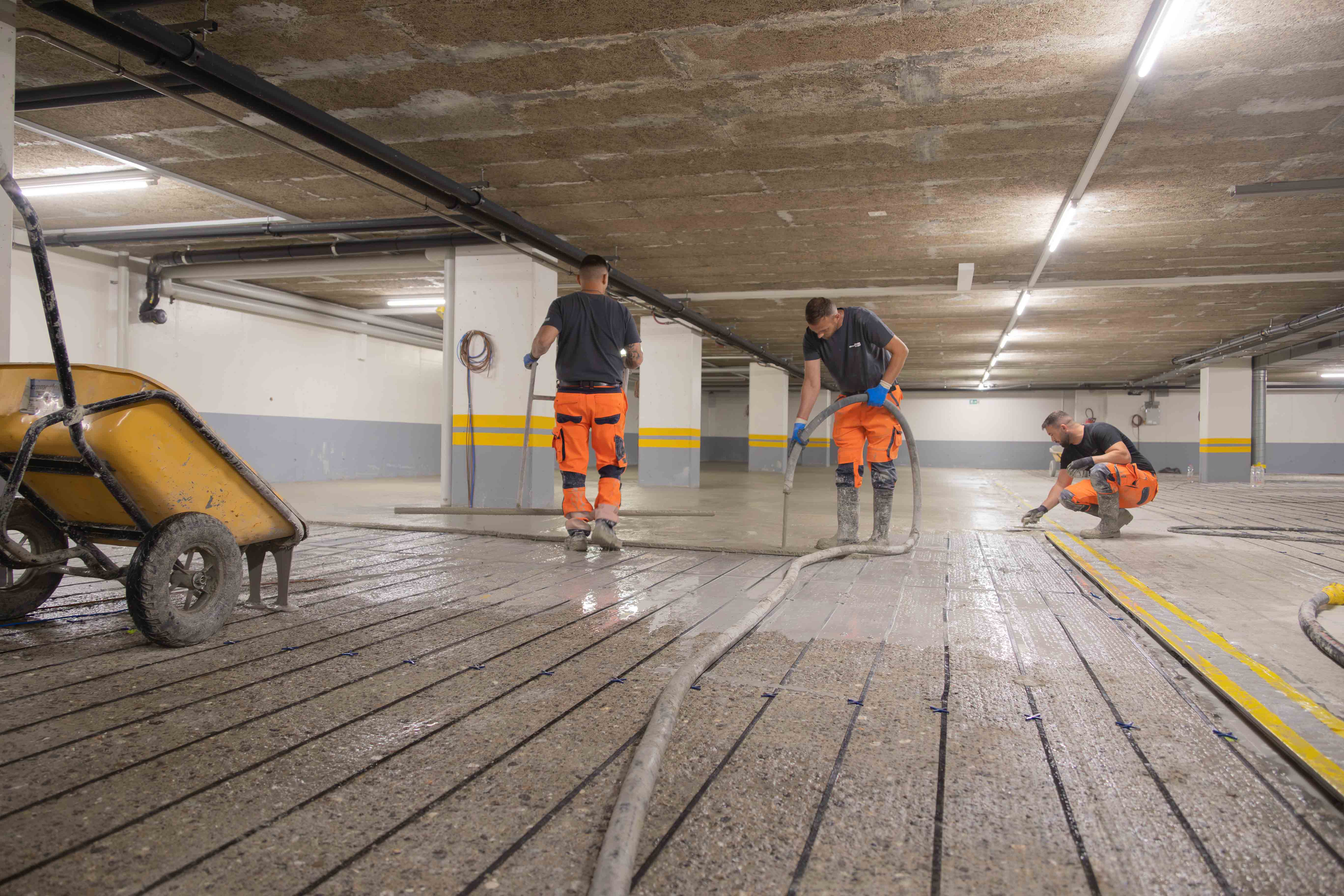
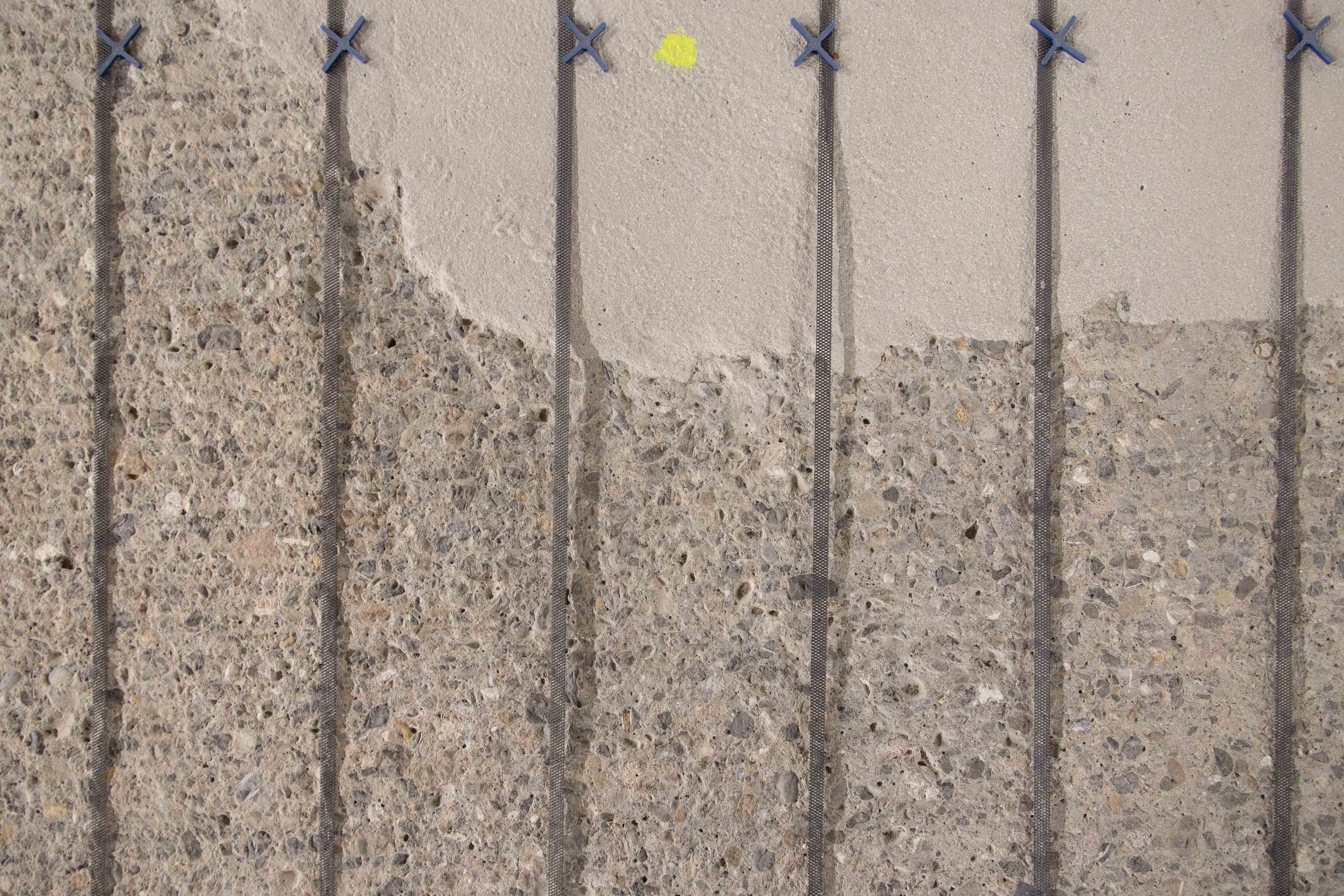
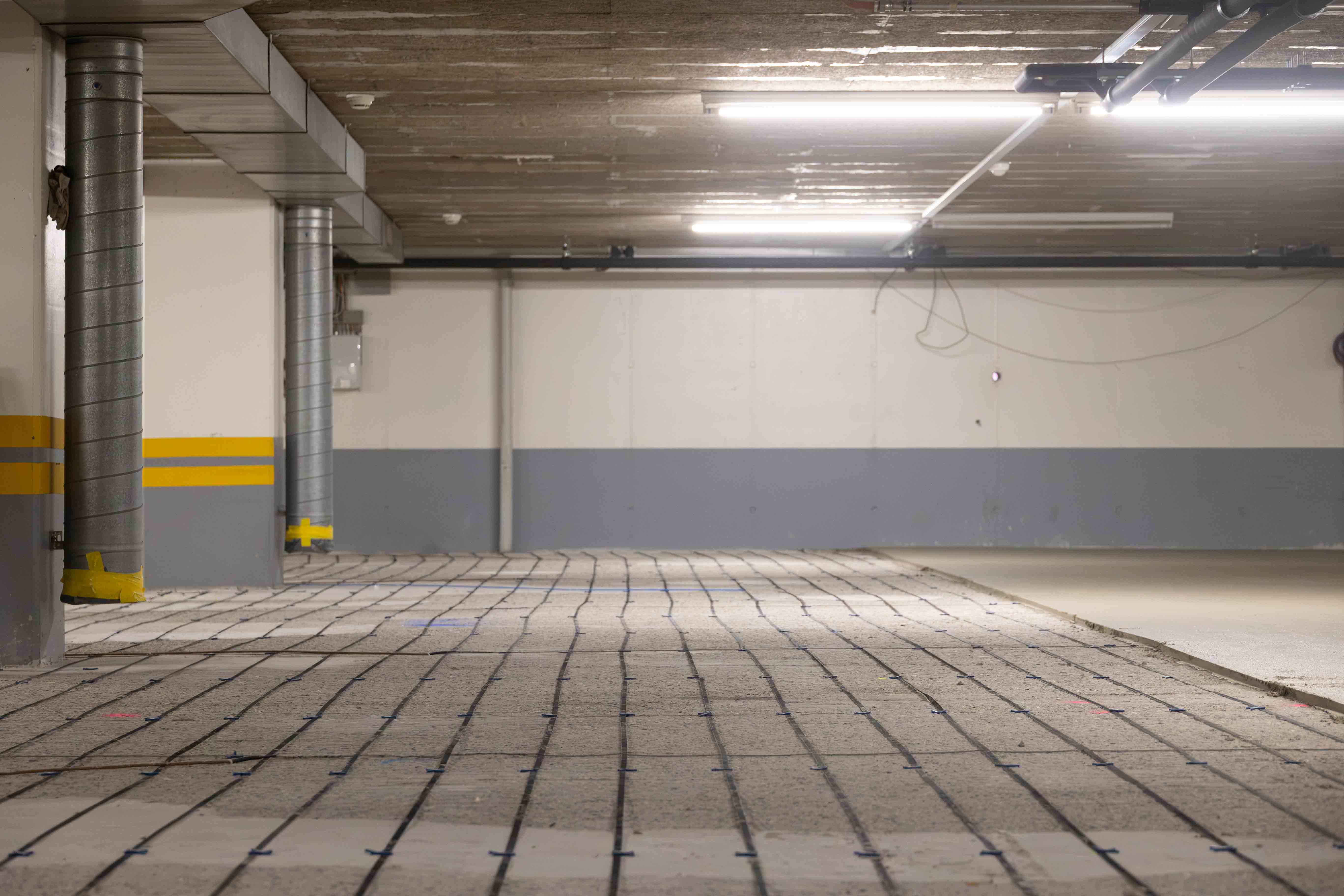
In this project, the decision was made to install a KKS system. This meant that the existing concrete could not be completely removed using high-pressure water. Instead, the damaged areas were specifically treated, reprofiled with a KKS-compatible R4 repair mortar, and then integrated into the new foundation structure.
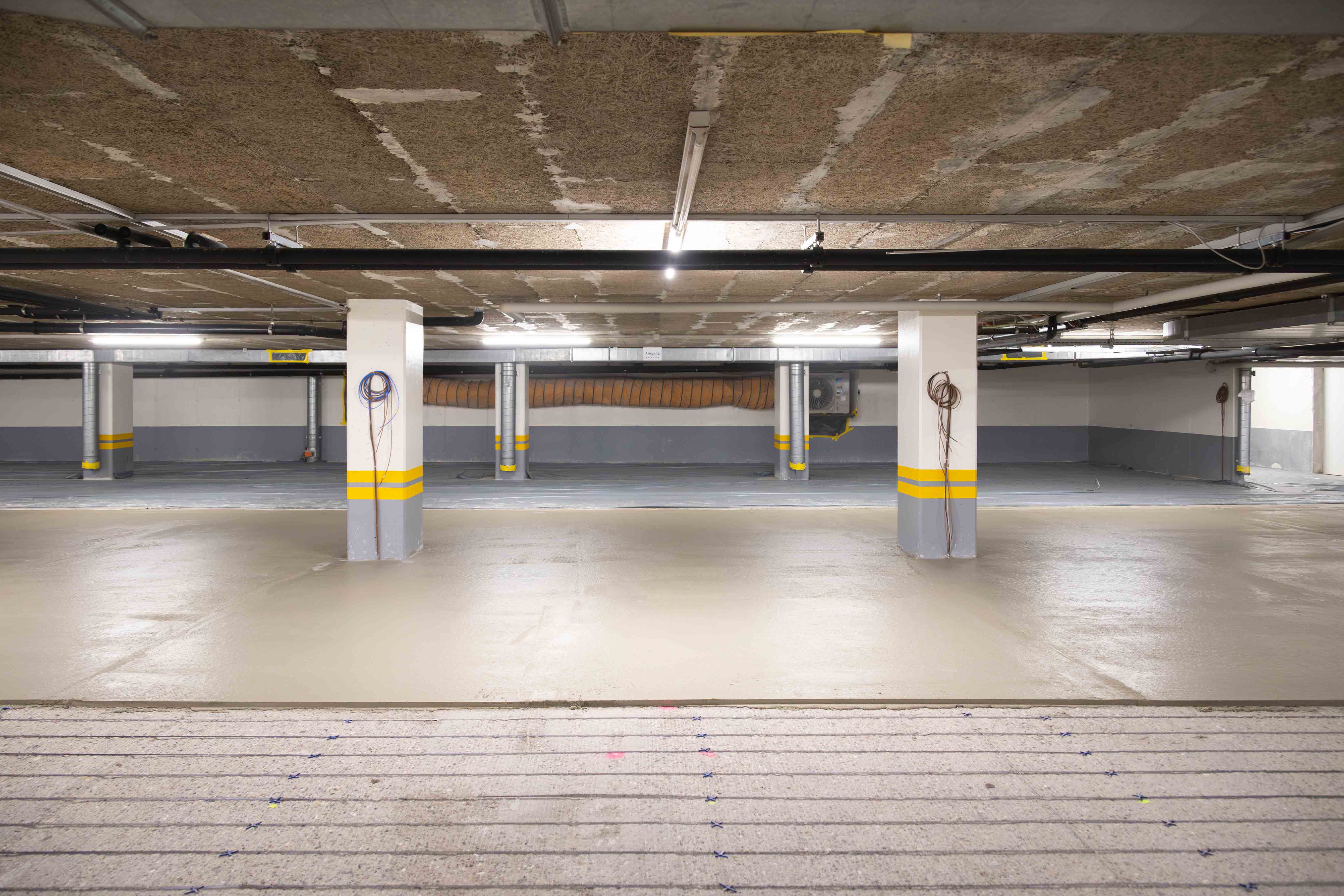
The affected areas were prepared, maintained, and, after the required drying and waiting periods, were then processed for coating again. The final step was an OS-8 system. The work was carried out in collaboration with Suicorr.
Preparation of existing concrete surfaces
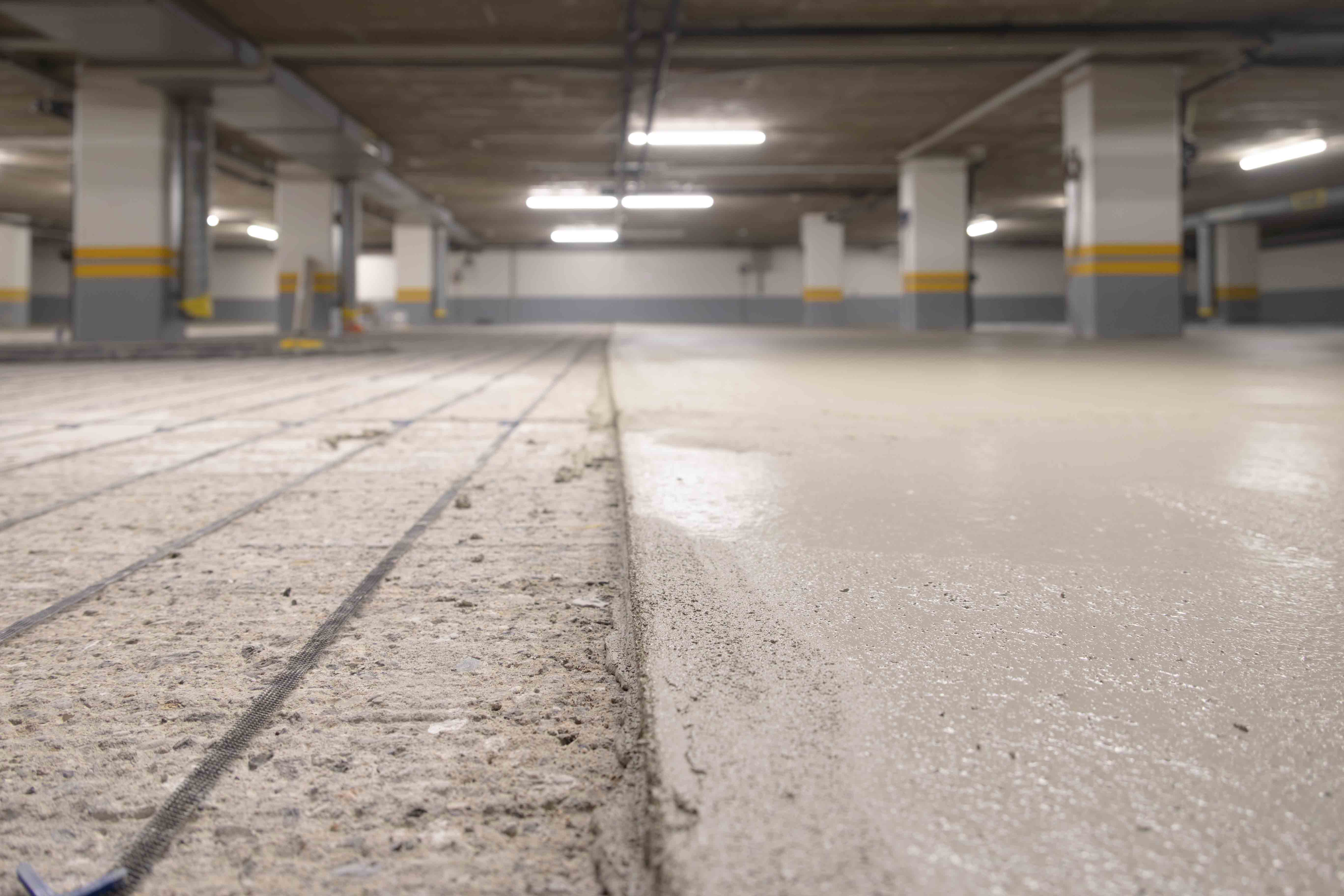
At the beginning, the preparatory work on the existing areas began. This included milling and ball blasting. The surface had to be prepared in such a way that loose components could be removed and the new structure could be built on a stable foundation.
Especially in a setting hall, this preparation is crucial. Vehicles bring moisture and dirt, and in winter, additional salt. Therefore, it is not enough to seal visible damage only superficially. The substrate must be suitable for further processing and form the basis for the reprecipitation mortar as well as the subsequent coating.
Reprofiling with KKS-compatible R4 repair mortar
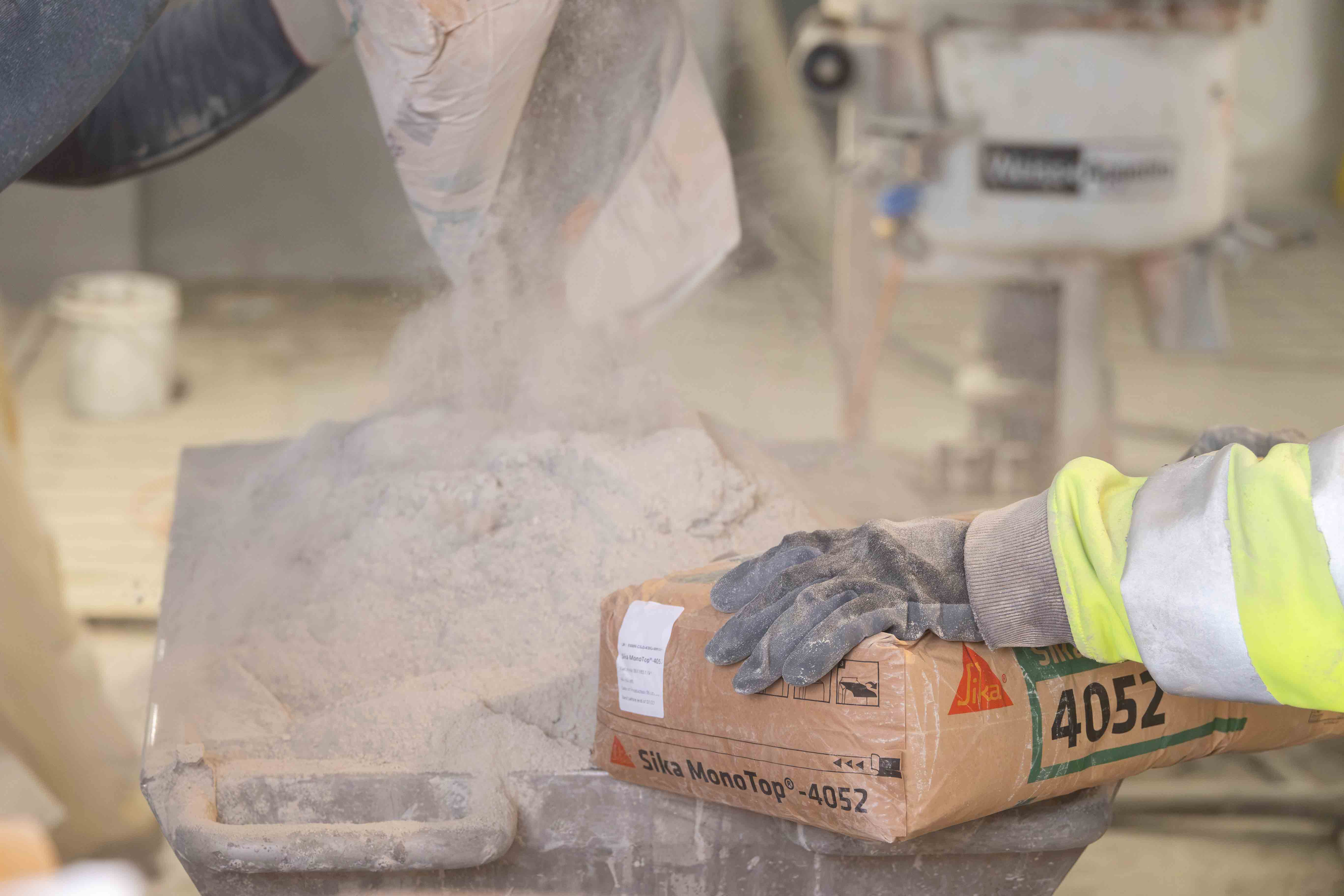
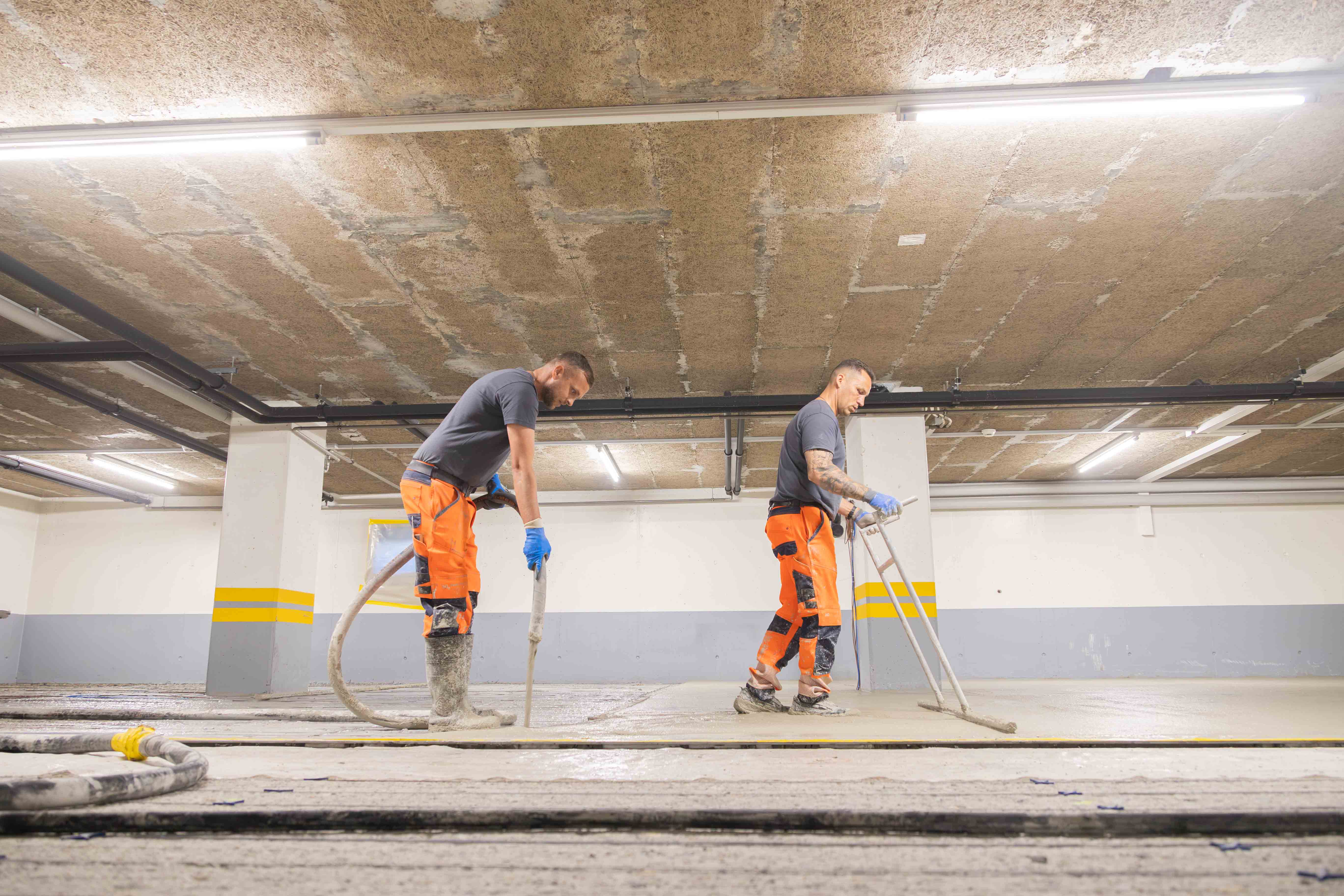
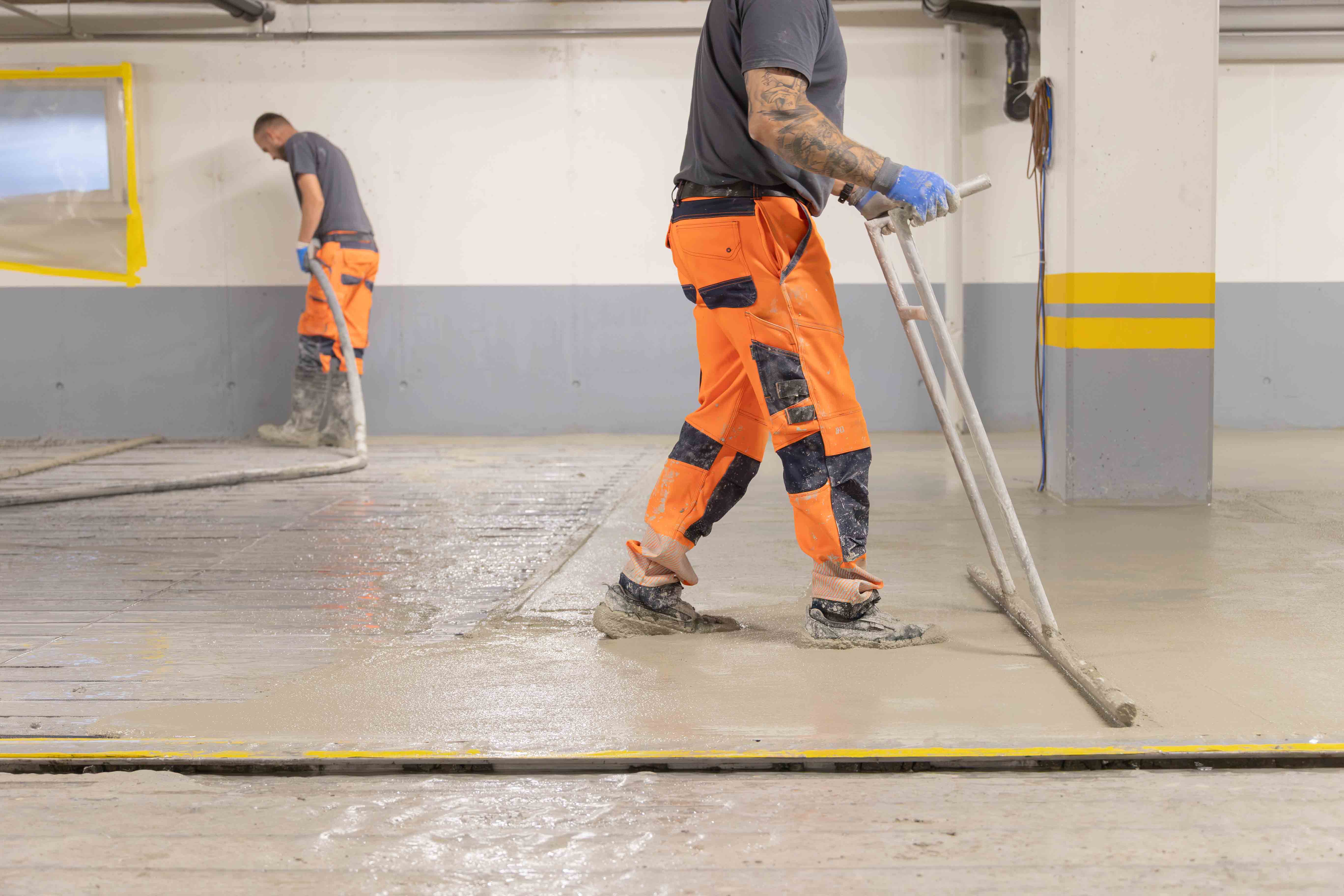
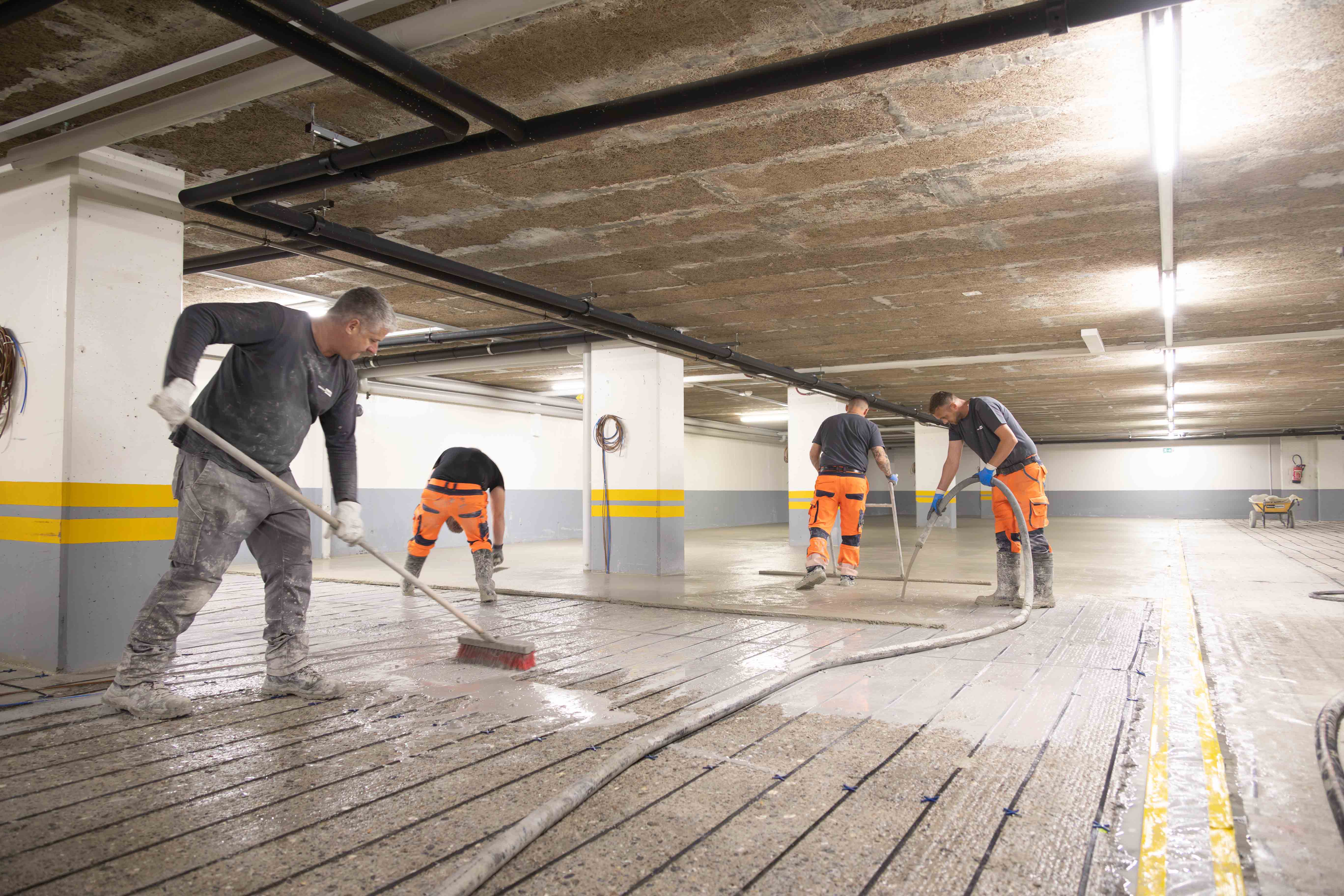
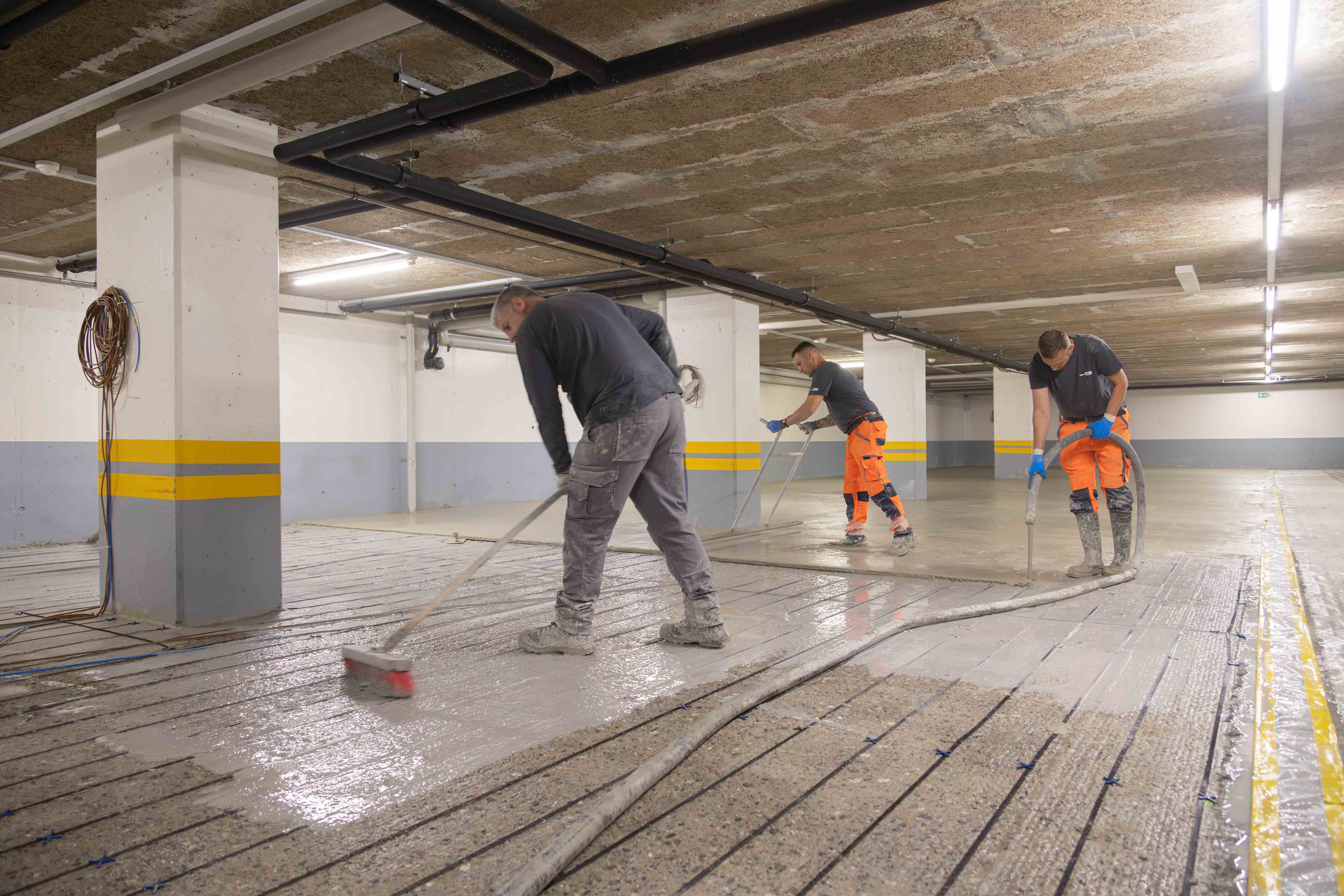
The damaged areas were reprofiled with R4 repair mortar, which is suitable for use in connection with cathodic corrosion protection. This allowed damaged areas to be reconstructed and adapted to the existing structure.
Such mortars are used when concrete surfaces need to be restored, balanced, and prepared for further use. In this project, it was important that the reprioritization mortar was not viewed in isolation but as part of the overall renovation: preparing the existing area, reprofiling damaged areas, adhering to waiting times, re-preparing the subsoil, and finally coating it.
Depending on the damage area, different layer thicknesses may be required. What is crucial is that the structure fits the area, the load, and the KKS system. Only in this way do the individual measures effectively complement each other.
Drying and waiting times as an important work step
After installing the new base structure or the reporfilm mortar, the required drying and waiting times had to be observed. This step is less visible than milling, ball blasting, or coating, but is just as essential for proper execution.
Only when the mortar is sufficiently ready for the next step can the surface be further processed. Too early coating or insufficient preparation would weaken the structure. Therefore, the surface was again prepared by ball blasting after the waiting time.
OS-8 system as final protection
After the re-subsurface preparation, the surface was coated with an OS-8 system. This protective system is suitable for walkable surfaces where the concrete must be protected from further influences. It forms a functional and protective layer on the prepared concrete surface.
The work on the KKS area was carried out using Suicorr. Due to the decision to use this system, the existing concrete did not have to be completely removed using high-pressure water. The renovation could be targeted at the damaged areas and the new ground structure.
While the reprofiling mortars rebuild the damaged areas and the OS-8 system protects the surface, KKS acts on the corrosion process of the reinforcement. This is important in a combined restoration because the individual measures must be technically compatible.
KKS in cooperation with Suicorr
In addition to reprofiling and the OS 8 protection system, cathodic corrosion protection also played a role. KKS is used to protect the reinforcement in the concrete from further corrosion. This is particularly important for concrete surfaces that have been exposed to moisture and salts over an extended period of time.
The work in the KKS area was carried out with Suicorr. This added a measure to the concrete renovation that goes beyond just the visible surface. While the reprecification mortar rebuilds the damaged areas and the OS 8 protection system protects the surface, KKS acts on the corrosion process of the reinforcement.
The reprecipitating mortar used also suited this structure, as it is suitable for use with cathodic corrosion protection. This is important for combined restoration work, because the individual measures must be technically compatible with each other.
Renovation of the current building stock
Renovations in industrial buildings bring their own requirements. The spaces are often closely linked to the use of the building. Access routes, parking areas, adjacent components, and stages must be taken into account during the execution.
The load is also different than with pure interior surfaces. Tires, steering movements, moisture and dirt all directly affect the floor. Therefore, a protective system is needed that is suitable for such surfaces and is processed cleanly.
In this project, the individual steps were intertwined: milling, ball blasting, reprioritization of the damaged areas, adherence to the drying and waiting times, repeated ball blasting, and final coating with an OS-8 system.
Protecting the parking lot in Bümpliz in the long term
The maintenance hall in Bümpliz shows why maintenance work in the park area is more than just repairs. As soon as concrete surfaces are damaged by moisture, frost or corrosion, the entire structure must be examined.
The KKS-approved R4 repair mortar restores damaged concrete areas. The KKS system protects the reinforcement against further corrosion. The OS-8 system provides the final surface protection for the continued use of the adjustment hall.
In Bümpliz, a solution was implemented that fits the use of the adjustment hall. The renovation addressed the damaged areas, took into account corrosion protection, and concluded with a protective system suitable for paved concrete surfaces.