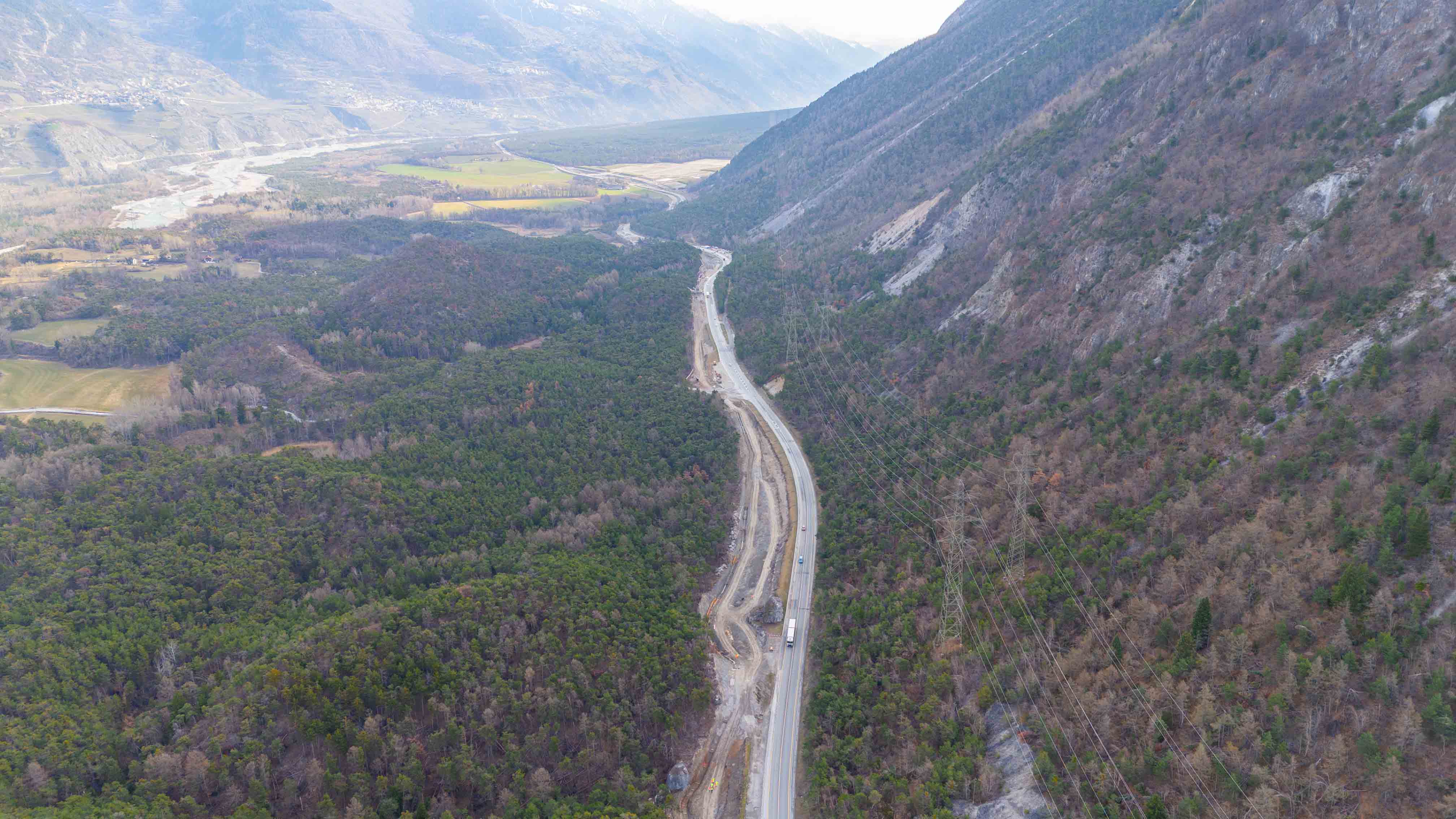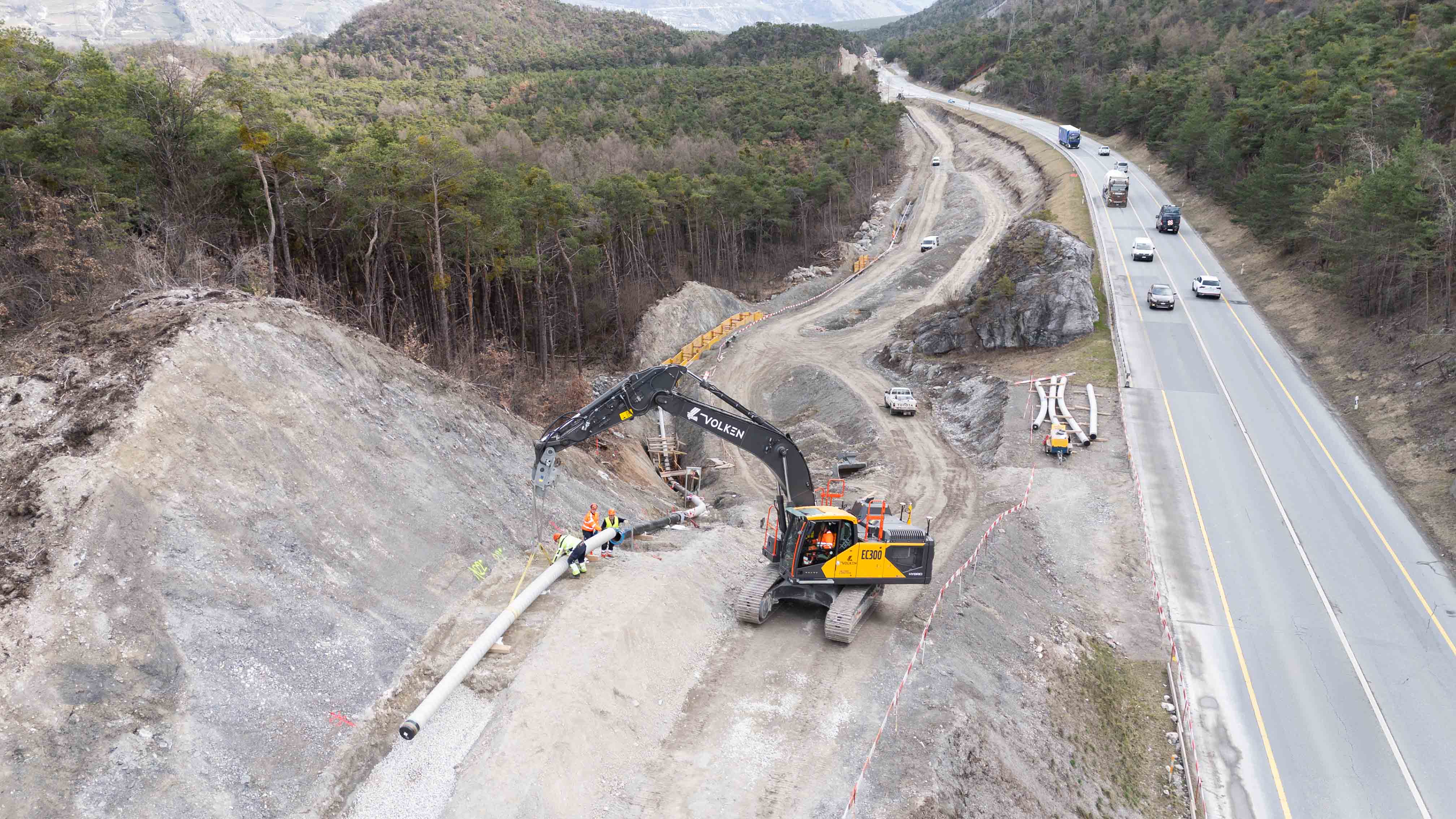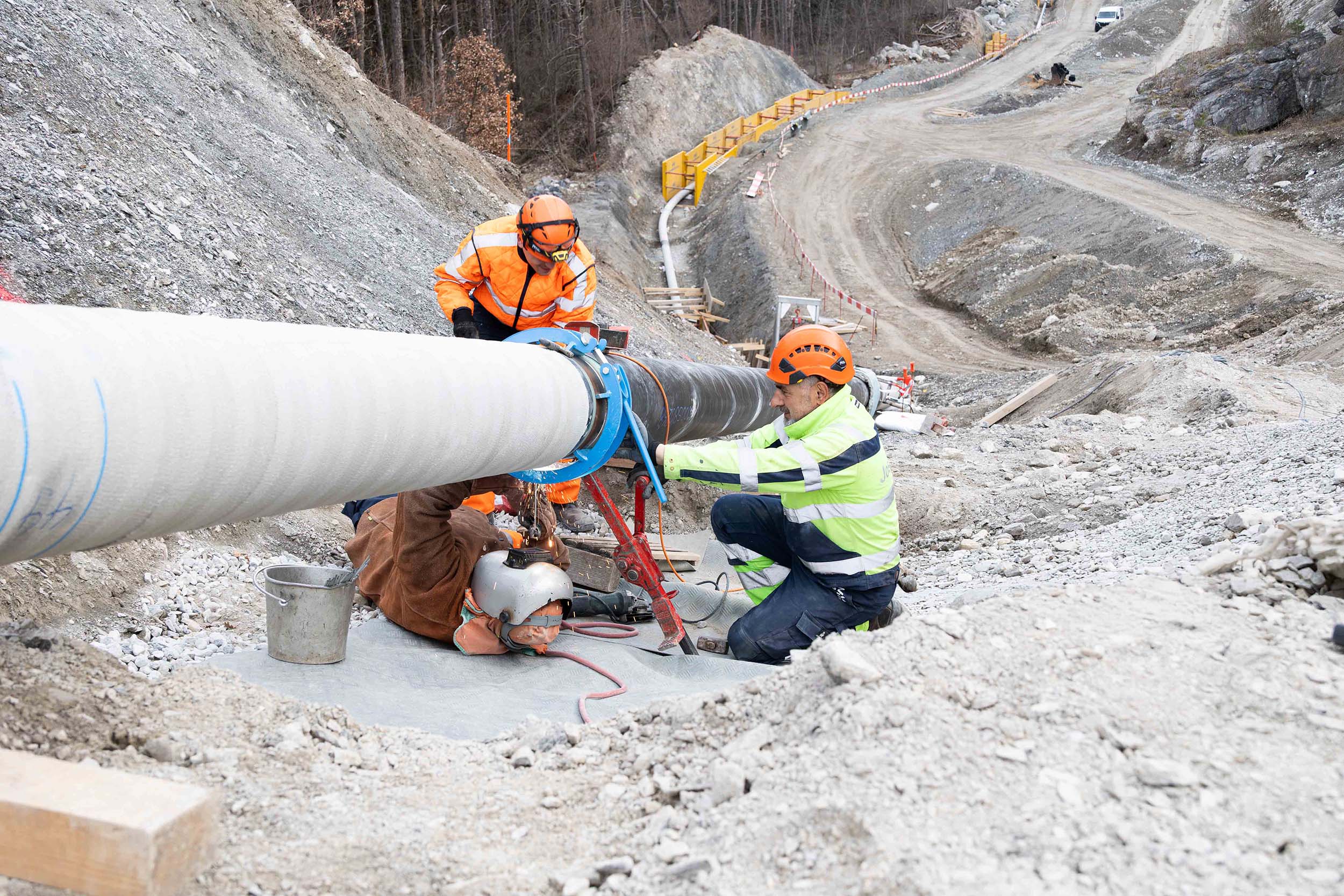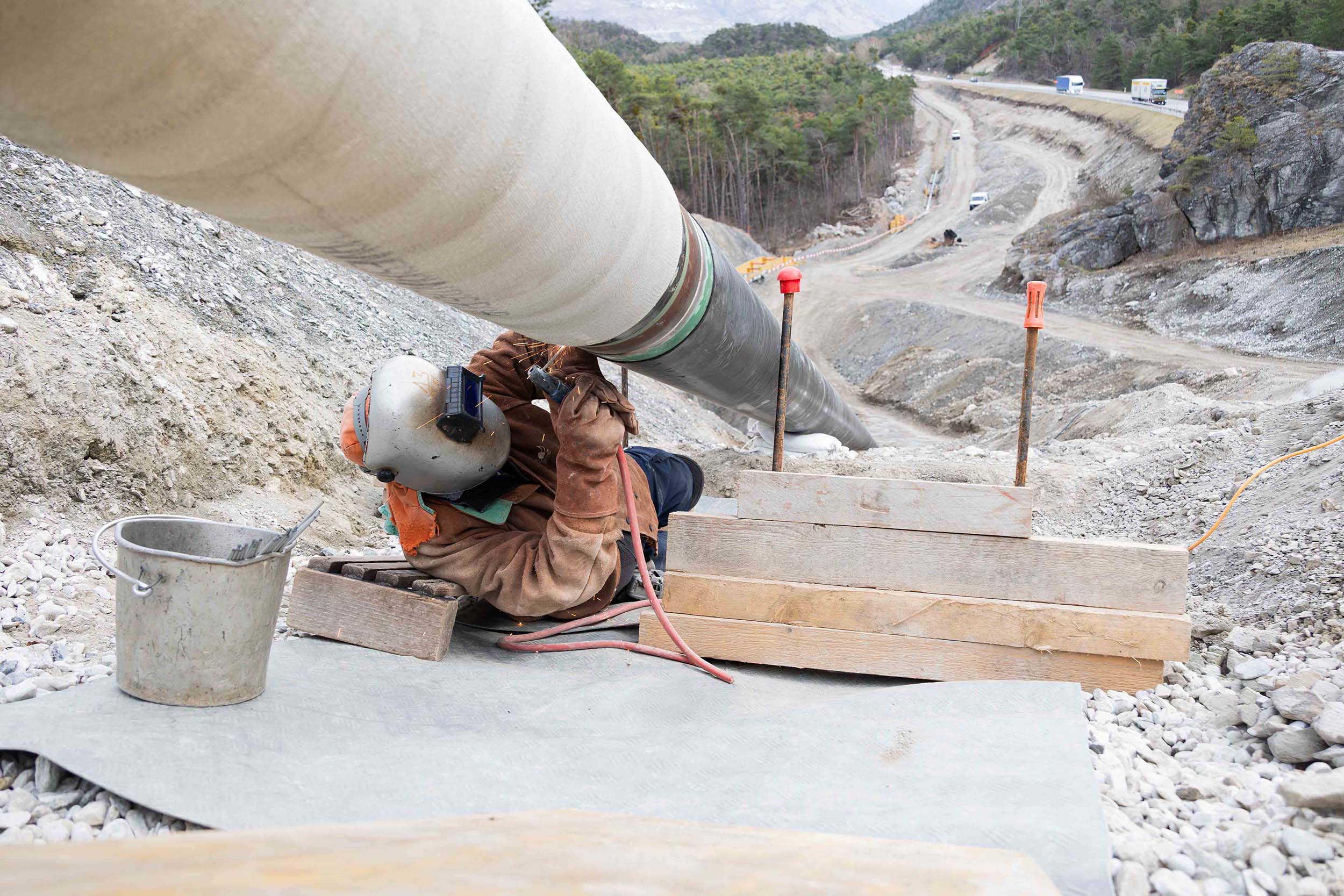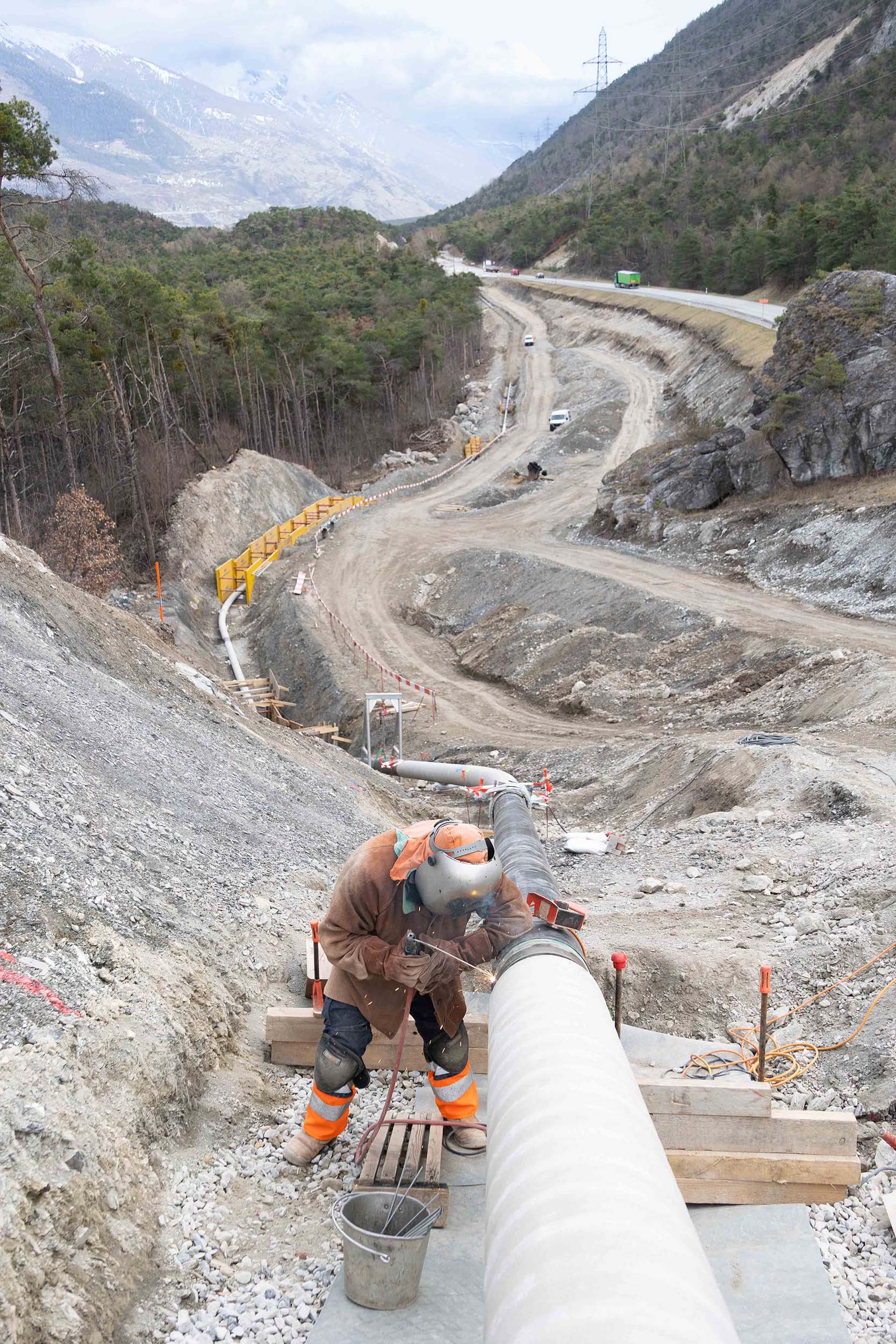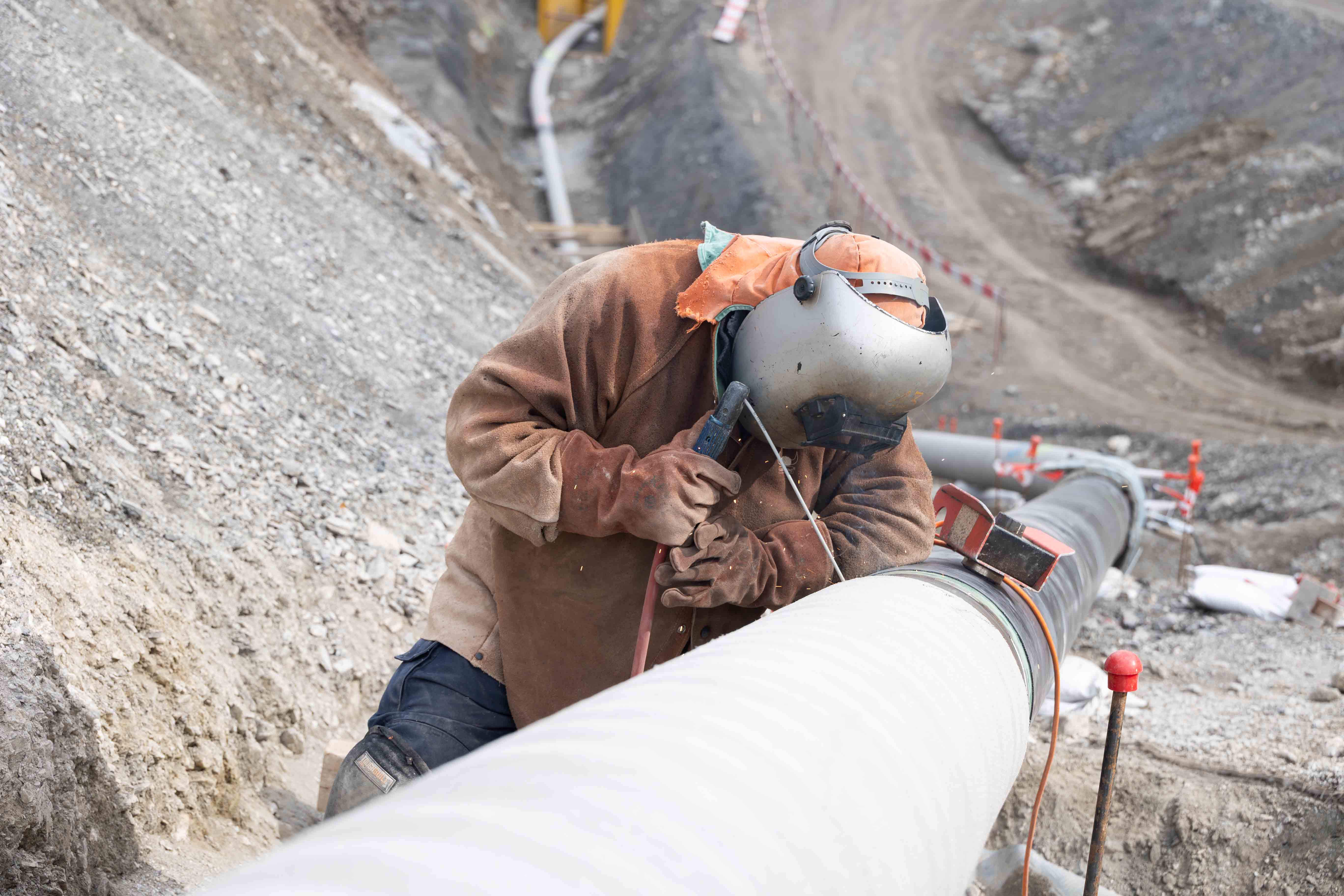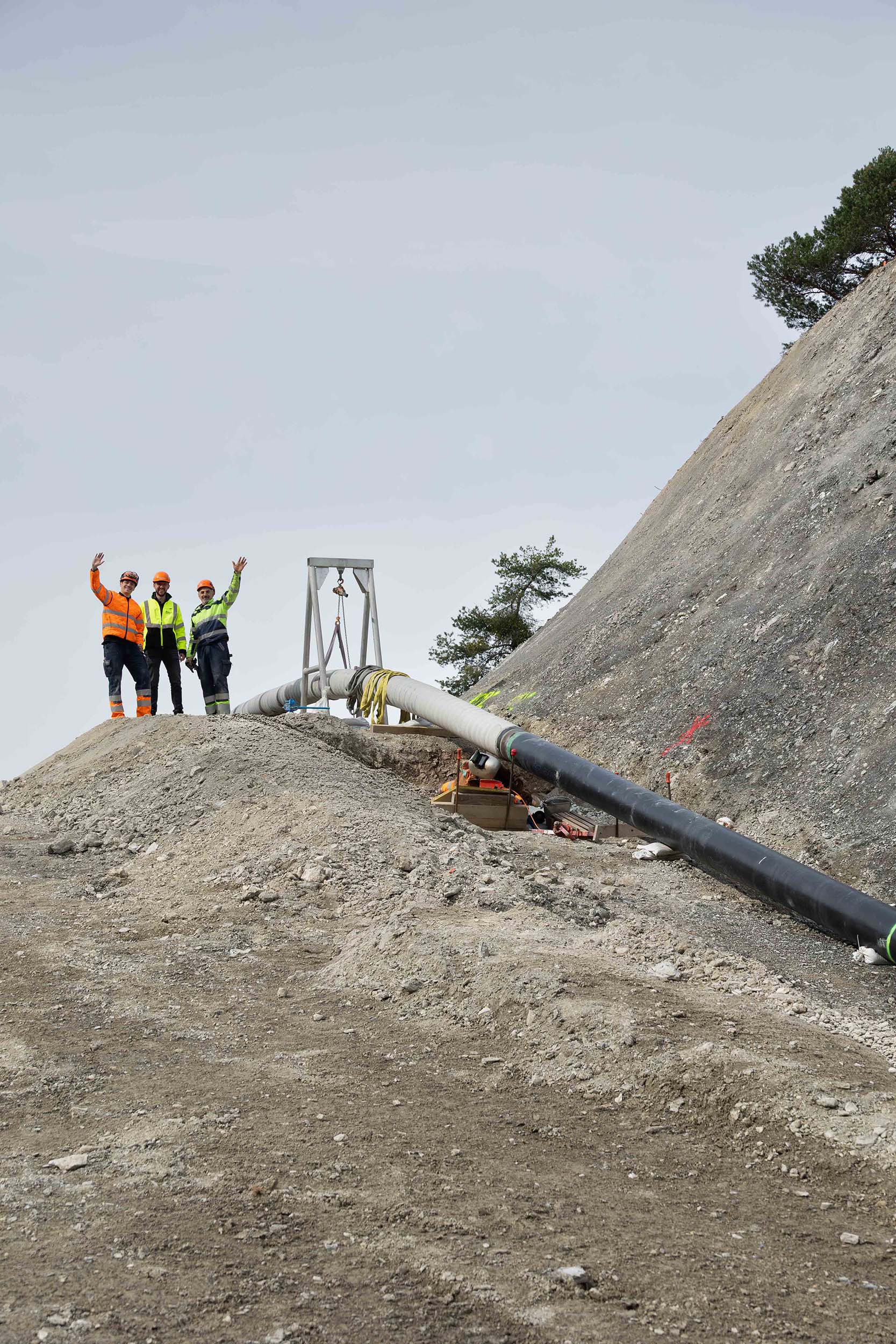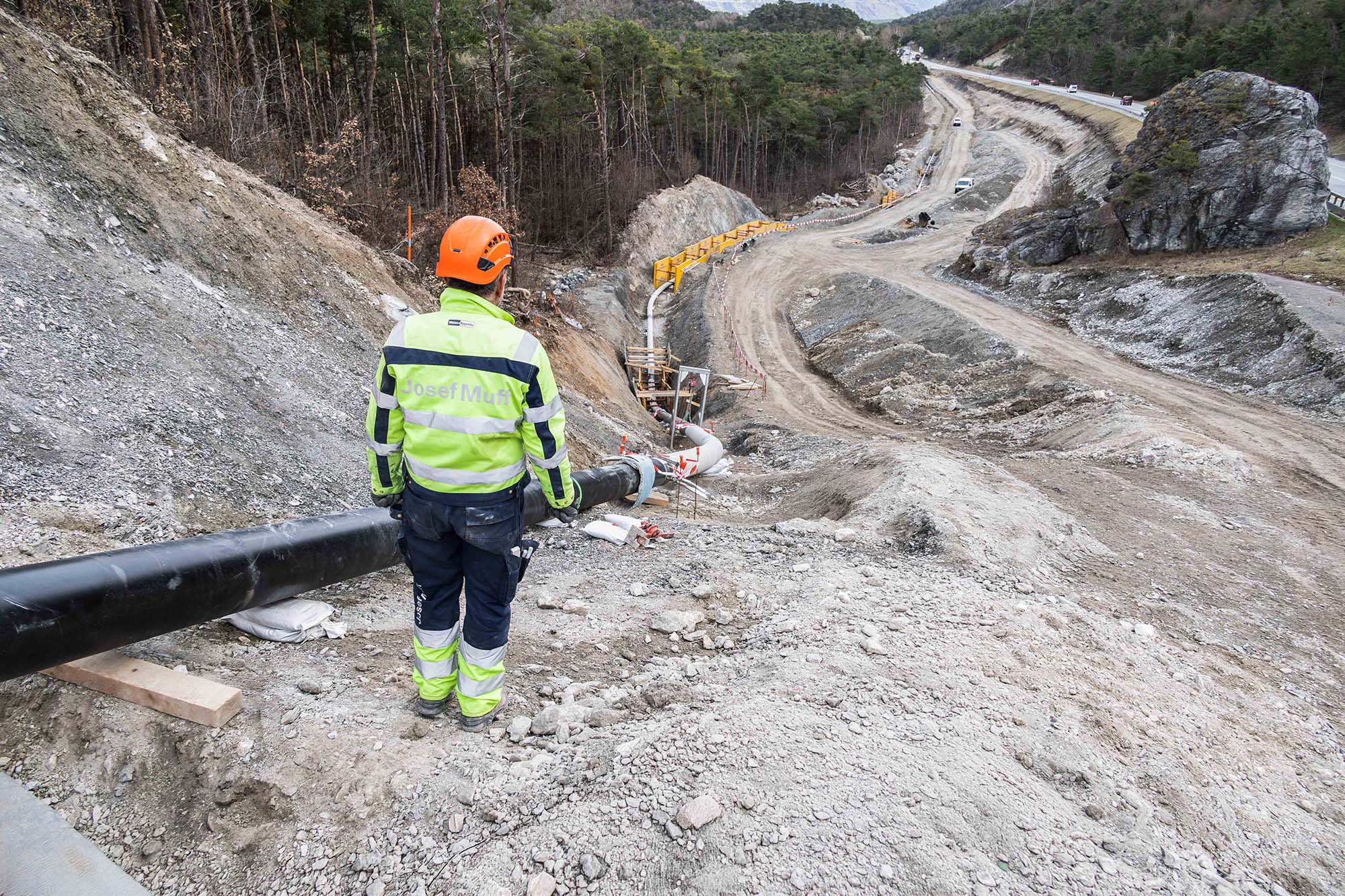
The Rhone Valley natural gas pipeline is currently a prominent feature of infrastructure work in Upper Valais. Where traffic normally flows towards Brig, a complex project is underway beneath the earth's surface. As part of the expansion of the A9 motorway, our pipeline specialists from Josef Muff AG are relocating a high-pressure gas pipeline over a length of 3300 meters.
This is a project that goes far beyond simply joining pipes. The route of the Rhone Valley natural gas pipeline runs through terrain that demands constant adjustments from the team and logistics. Since horizontal directional drilling is not being used, every meter of construction progress takes place in conventional trenches.
The Geometry of the Rhine Valley Natural Gas Pipeline
The reason for this effort lies in the expansion of the A9. Where lanes will be created in the future, the energy supply was previously located. To make space for traffic, the Rhone Valley natural gas pipeline has to be relocated and safely embedded in the ground at a new location.
The technical data of the Rhone Valley natural gas pipeline illustrate the responsibility involved in its construction:
- Operating pressure: 70 bar
- Nominal size: DN300
- Wall thickness: 6.3 mm
- Length of rerouting 3300 m
Under the patronage of Swissgas AG and DNSB, and in collaboration with partners such as Volken, ERI, and Hubag, a structure for decades is being created here. The team, consisting of a chief fitter, welders, and fitters, has been overseeing the work through the various sectors since August 2025.
Precision on steep slopes and in the workshop
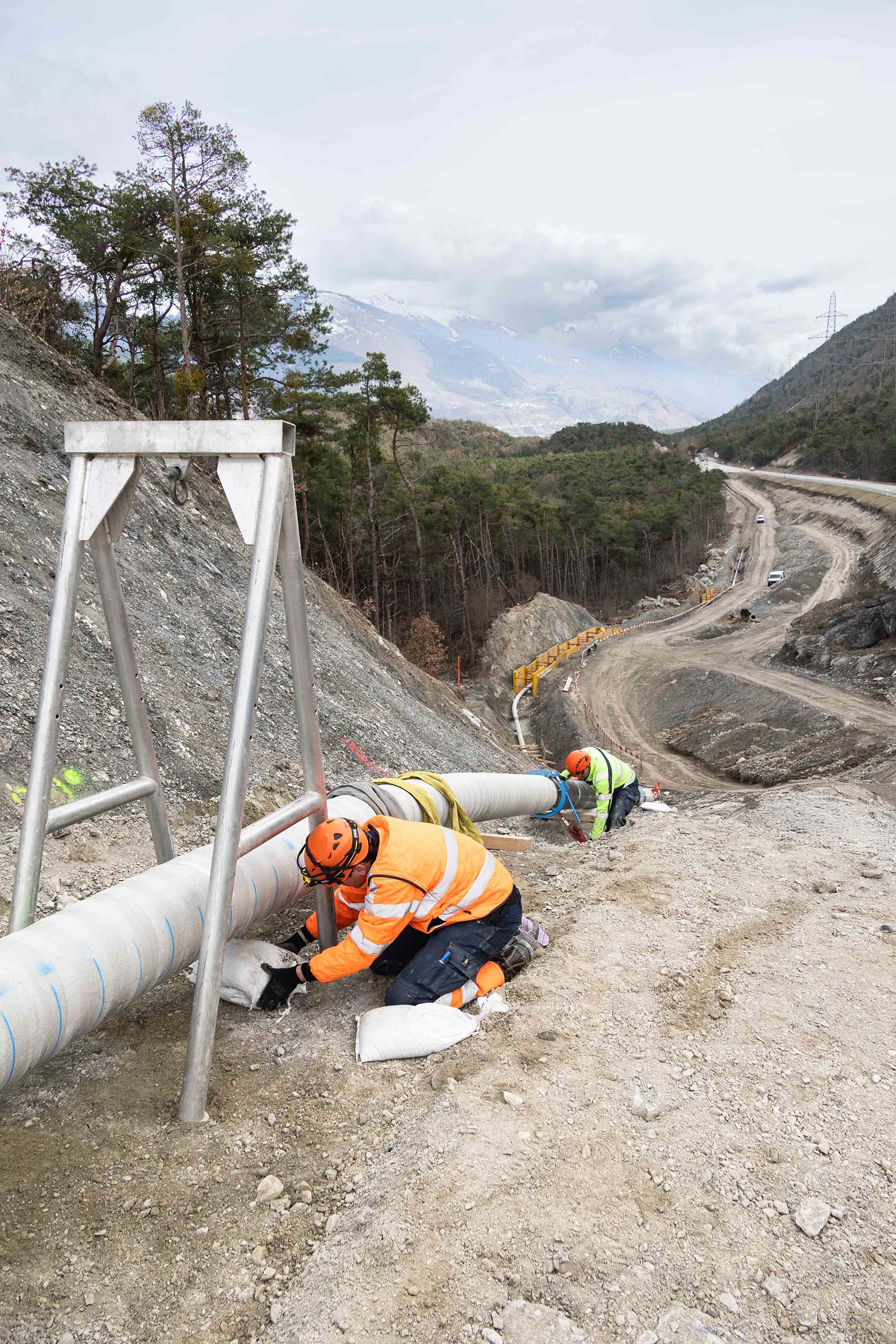
A special feature of the Rhone Valley natural gas pipeline is its route. Valais is known for its topography, and that is evident here as well. Part of the pipeline runs over extremely steep slopes. In these sections, assembly is extremely hard work. Humans and machines must be secured in such a way that the heavy pipe elements can be precisely positioned.
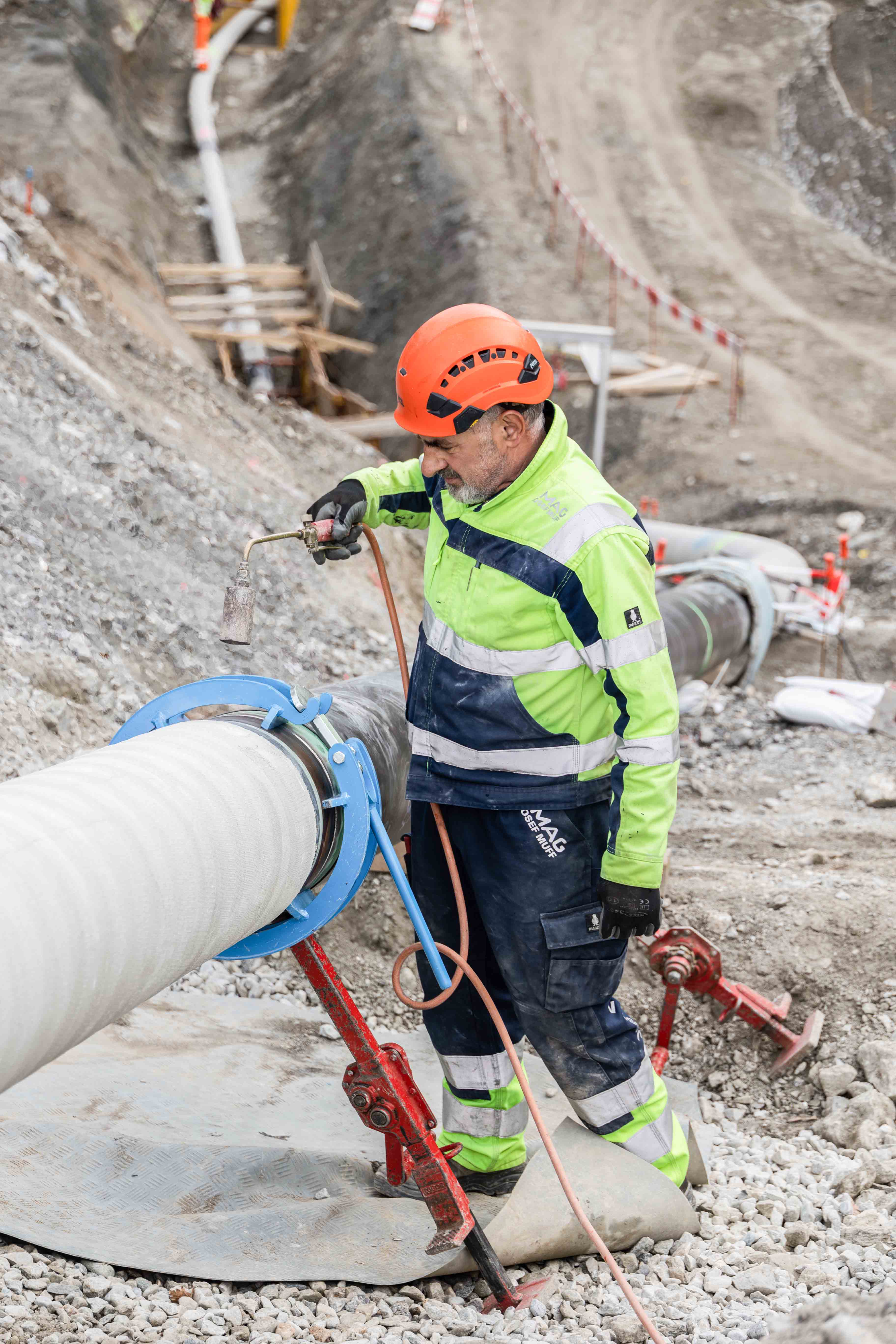
To ensure the pipeline follows every curve of the terrain, 74 cold bends and 20 hot bends are used. A logistical system comes into play here: the bending angles are measured on-site in the trench of the Rhone Valley natural gas pipeline. The data goes directly to the factory in Sarmenstorf. There, workshop fitters bend the pipes to the exact dimensions and deliver them back to the construction site just in time. This allows each pipe to be installed in the route without stress.
Crossings under demanding conditions
The Rhone Valley natural gas pipeline must overcome special structural challenges at two locations. In the western sector, the pipeline runs under the cantonal road. It is located about 8 meters deep there. Traffic will likely have to be shut down once for this crossing. Apart from that, the road will remain in operation during the construction work. In other sections, massive shoring will ensure that soil and traffic loads are safely contained.
The eastern crossing of the Rhone Valley gas pipeline also requires precise execution. There, the team encounters a nail wall that is approximately 80 degrees steep. The pipeline is installed vertically. After fixing it in place, this section of the pipeline is concreted and permanently integrated into the tunnel wall.
The path to completion in 2027
The work on the Rhone Valley natural gas pipeline is divided into sectors from A to M. So far, sections A through C and G through K have been successfully completed. A 32-meter-long pipe bridge supplements the series of special engineering structures along the route.
The project is scheduled for completion in spring 2027. The final integrations into the existing network of Swissgas AG are scheduled for April 2027. Until then, every meter of the Rhone Valley natural gas pipeline will be inspected and documented to ensure its safe Energy supply in Valais to ensure in the long term.
The Rhone Valley natural gas pipeline shows that successful pipeline construction stems directly from quality craftsmanship, precise logistics, and on-site technical problem-solving.