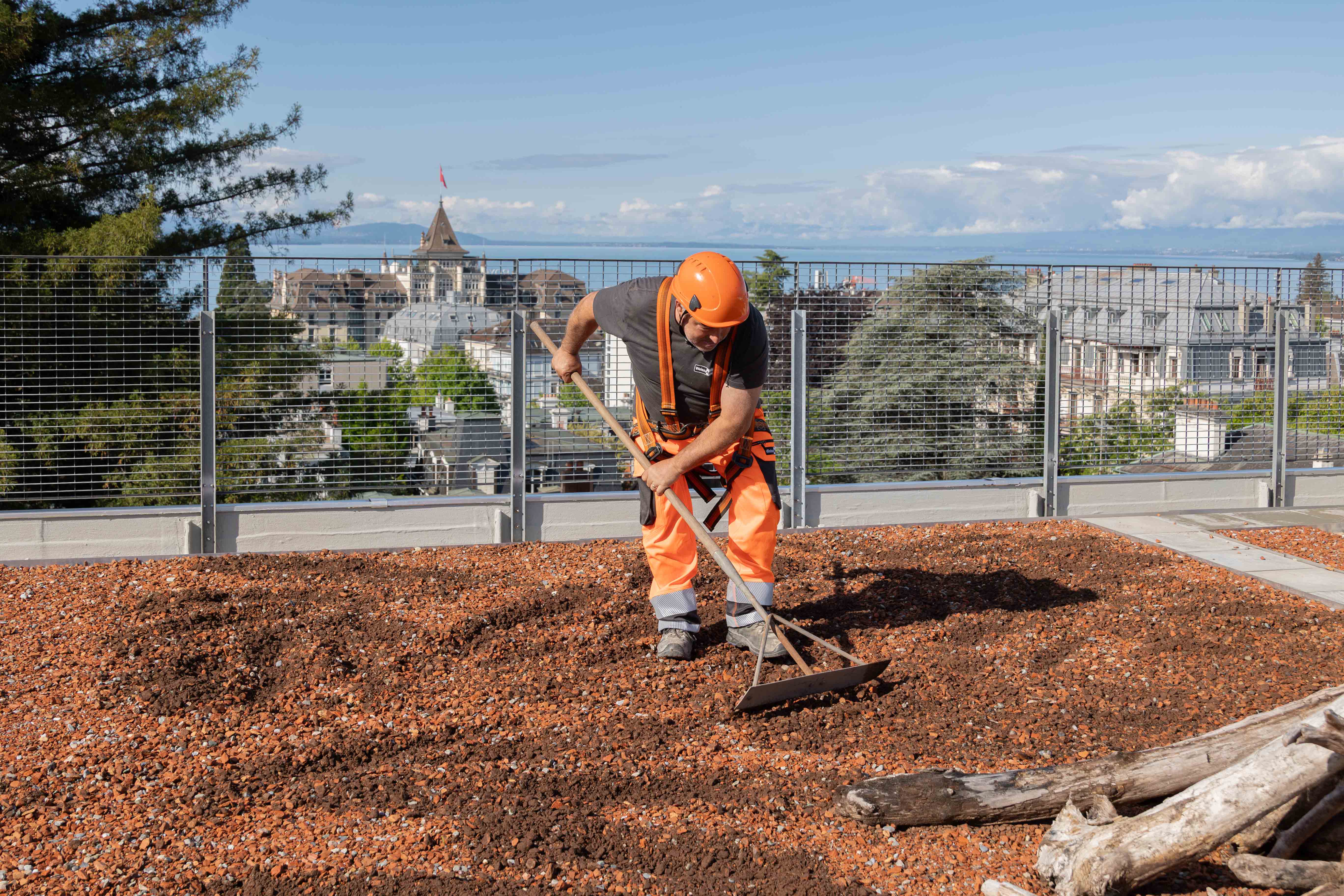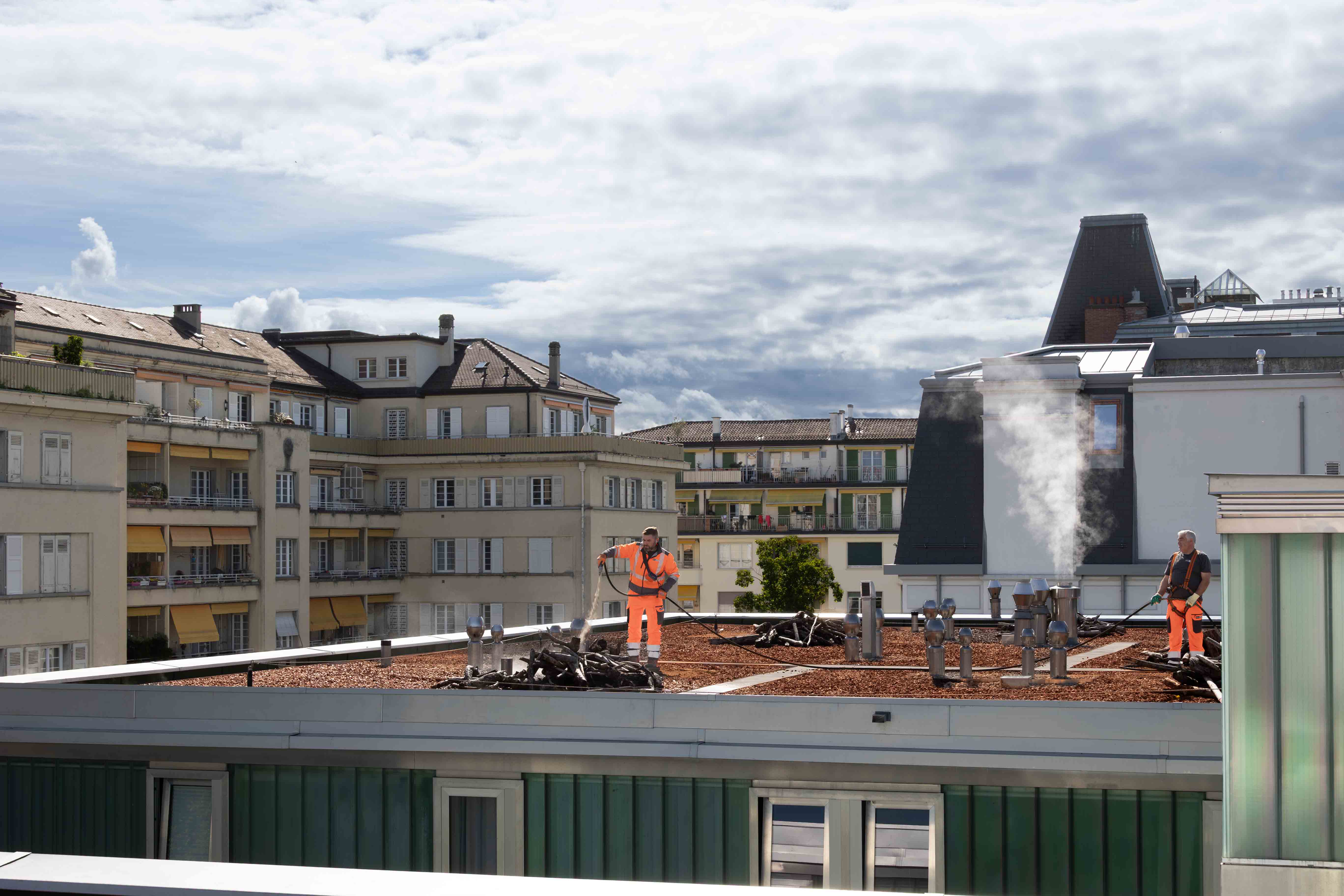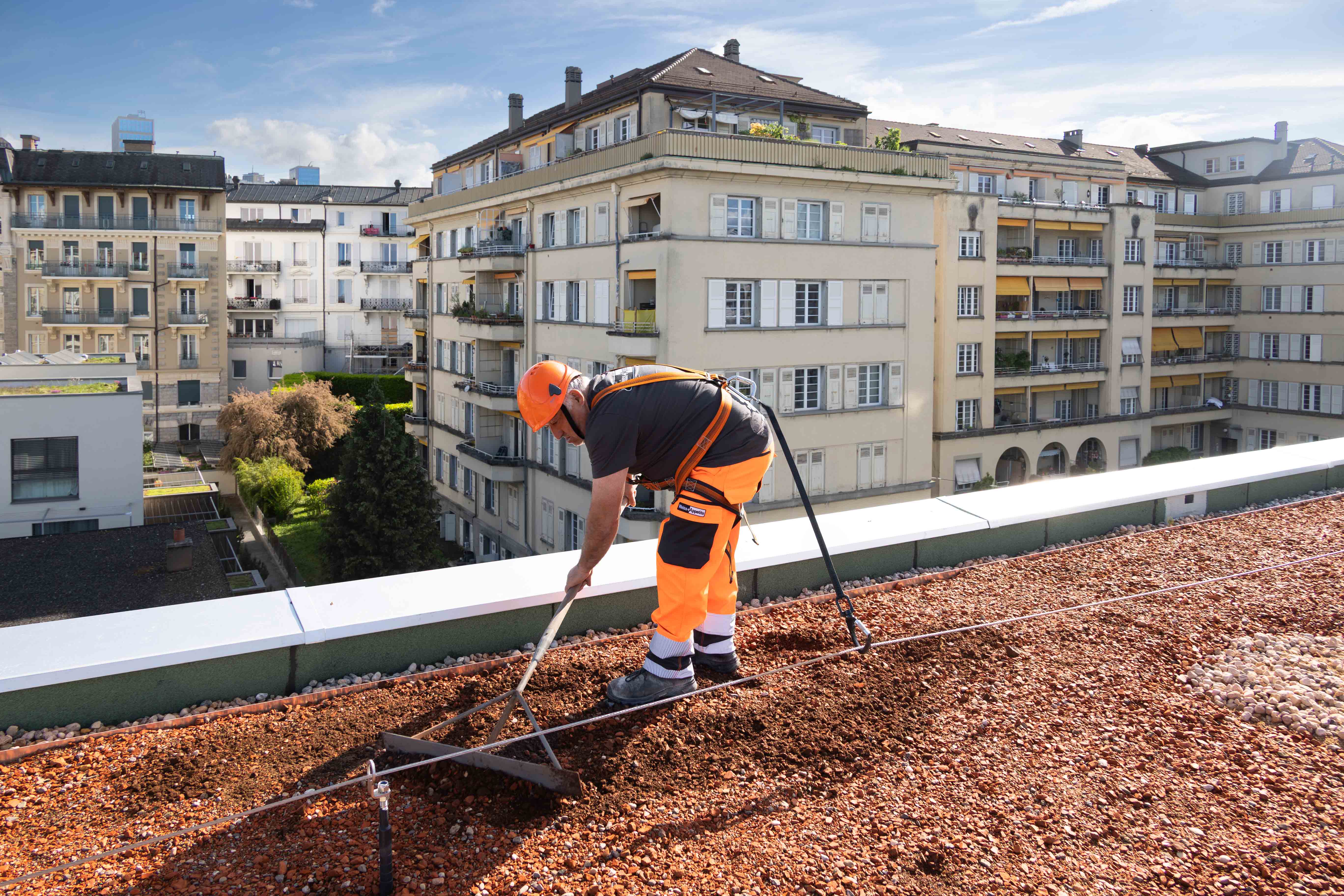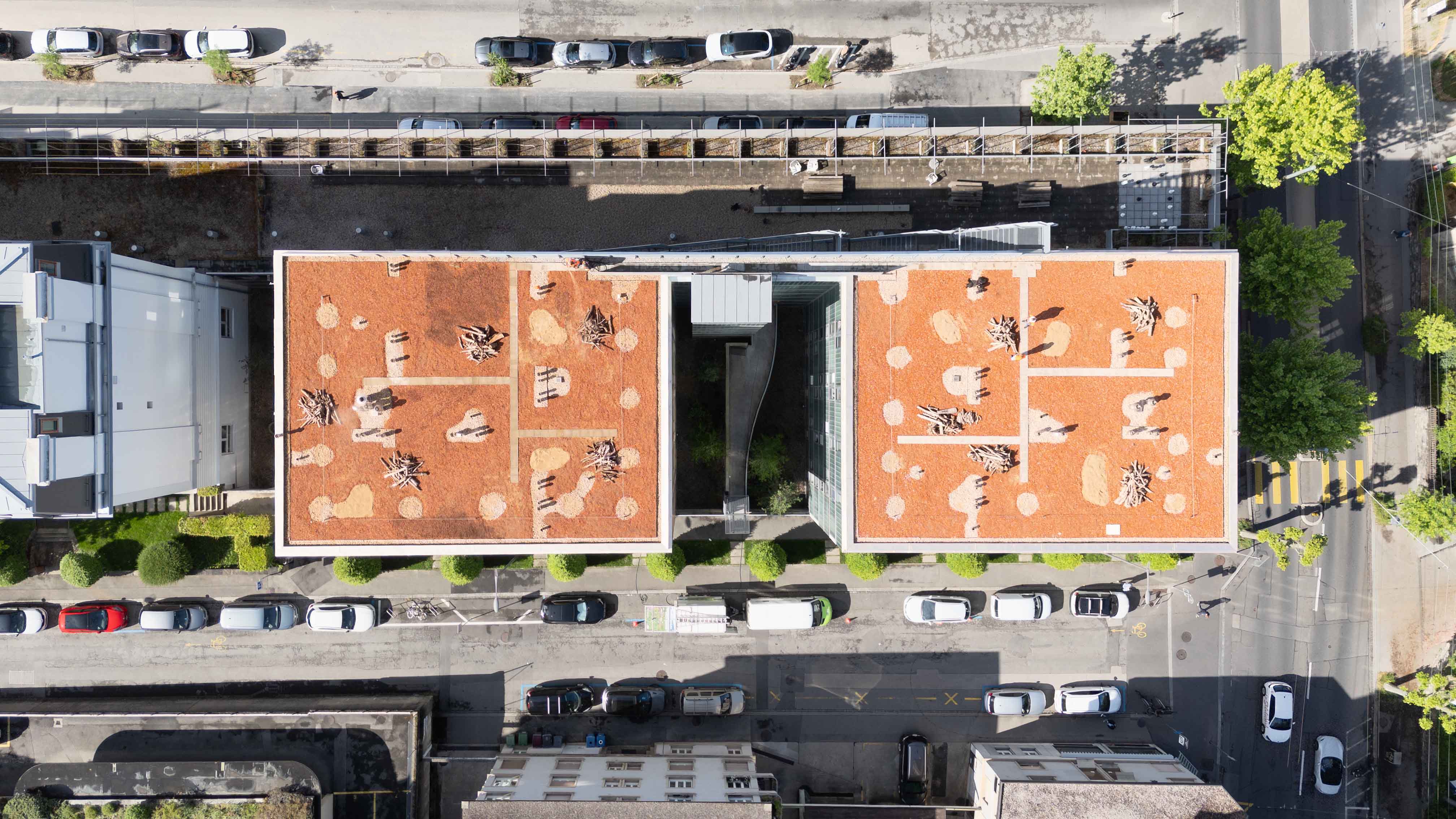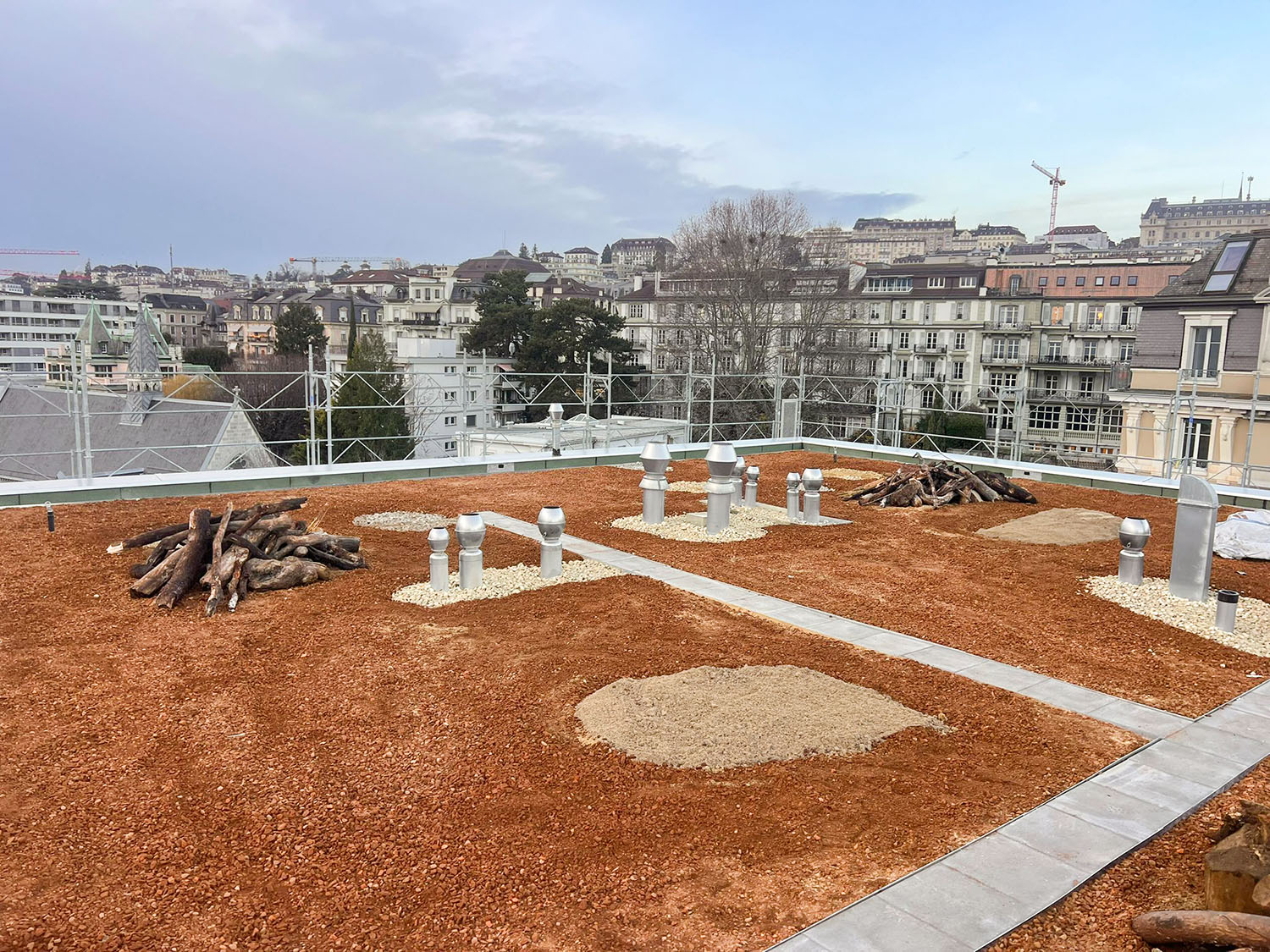
In the center of the city of Lausanne an extensive biodiversity green roof with an area of 600 m² was created. This extensive biodiversity green roof retains rainwater, protects the roof waterproofing in the long term, and simultaneously creates species-rich habitats above the rooftops of Lausanne. The design was carried out according to the specifications of the City of Lausanne, and step by step, a roof structure was created that is technically functional and ecologically convincing.
Protection and water retention layer for extensive biodiverse green roofs
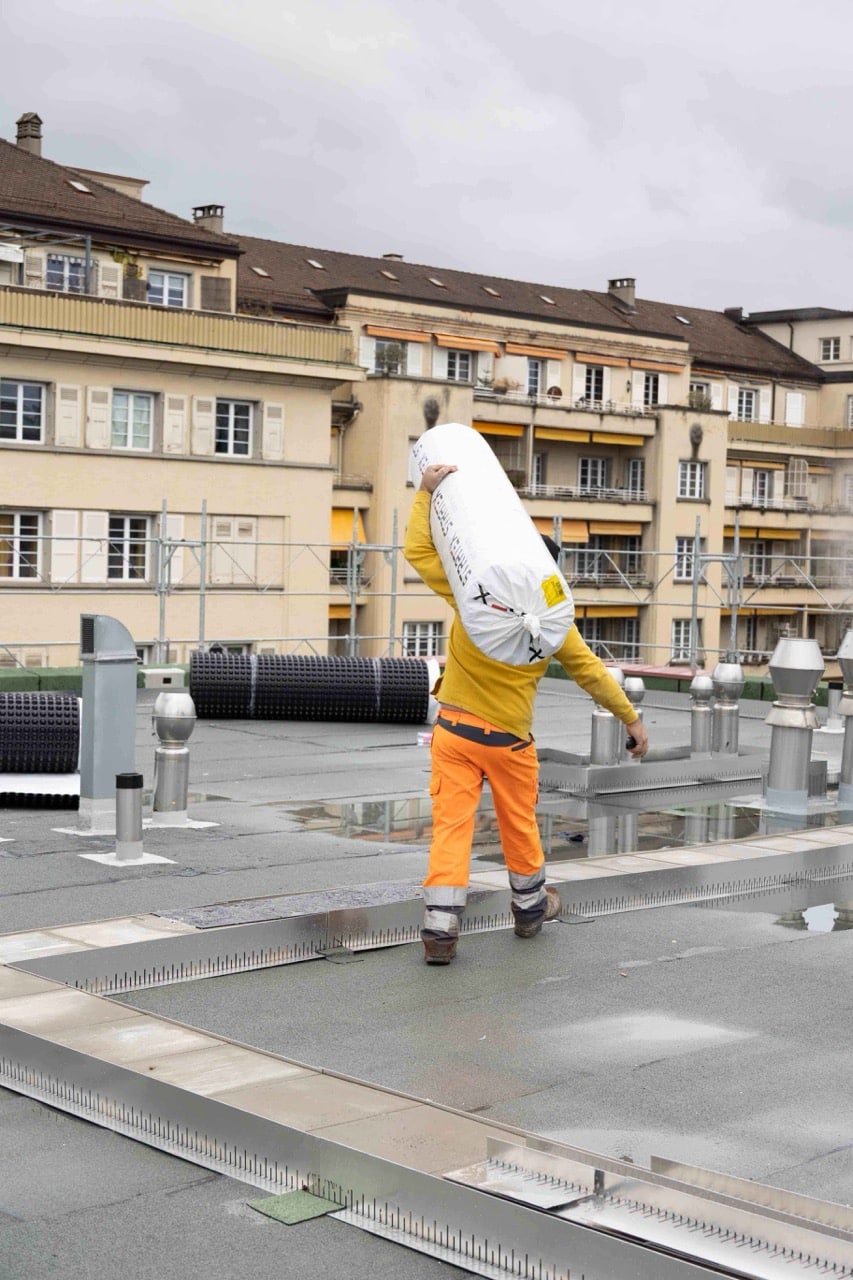
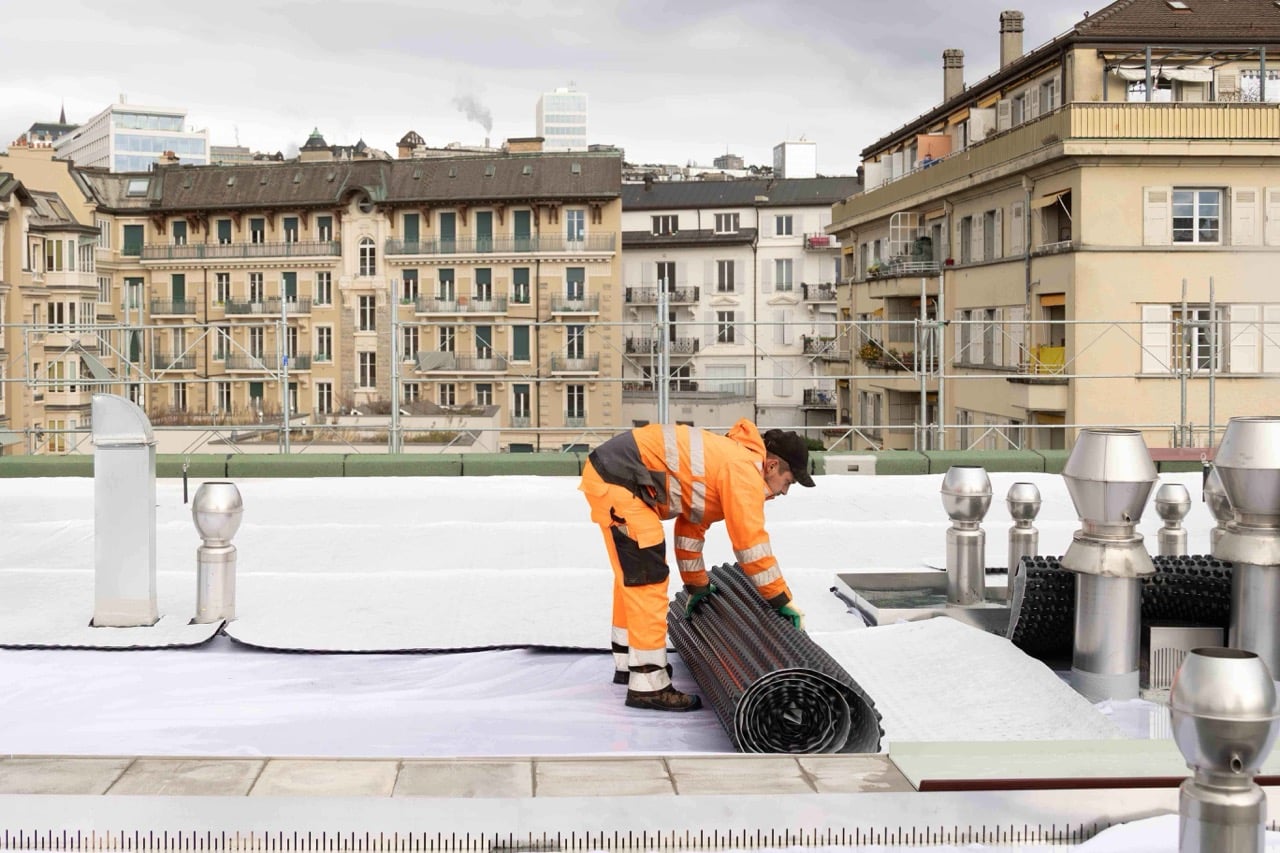
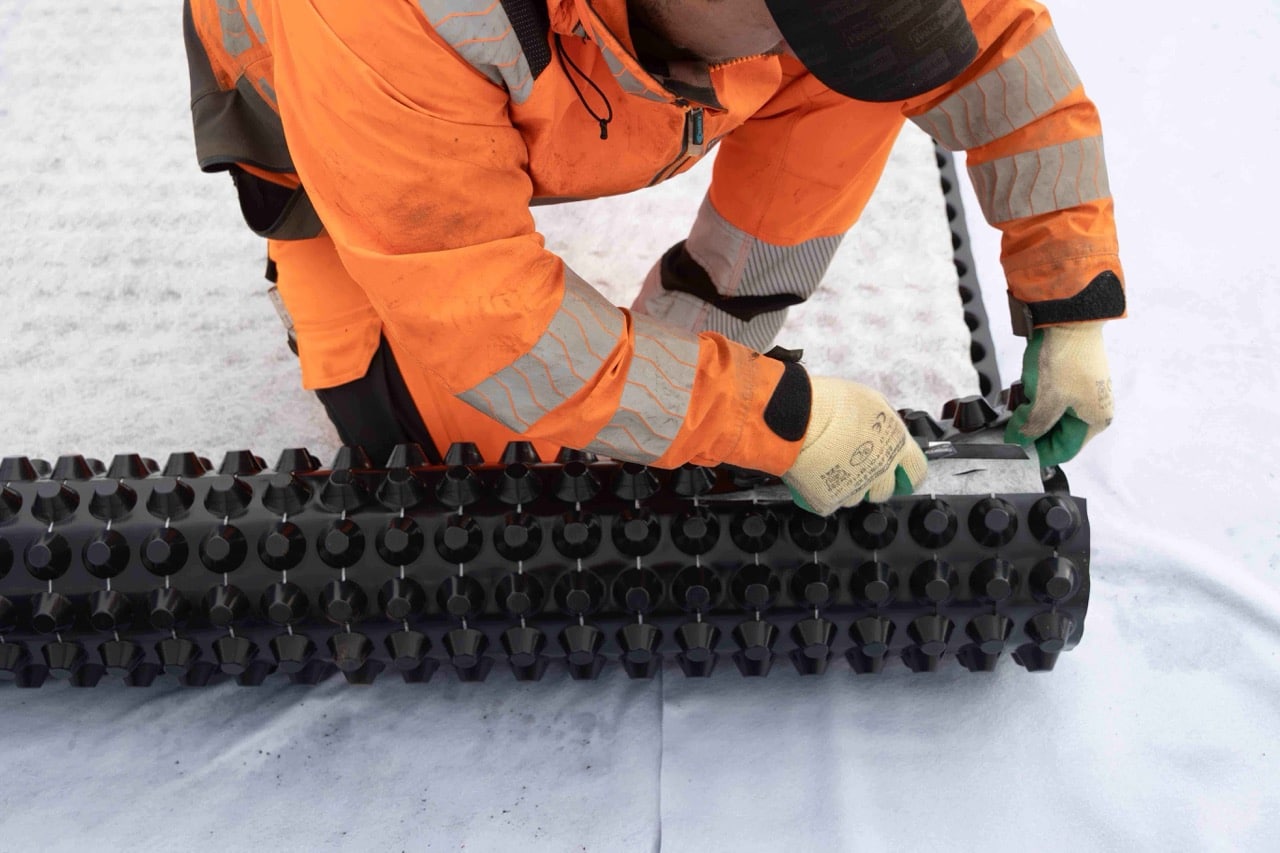
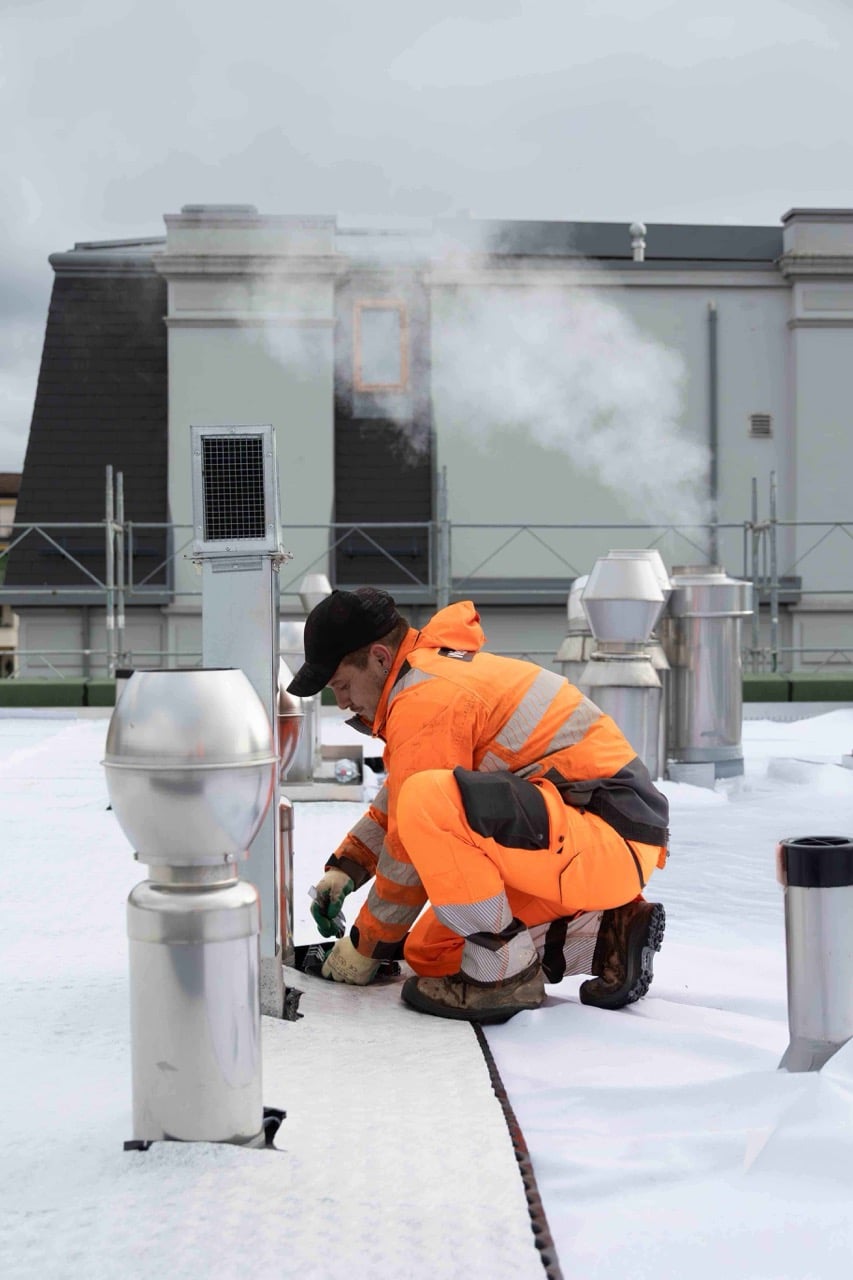
As the first layer, we installed a protective and moisture-retention fleece. It protects the roof waterproofing from mechanical impact and retains water for the upper layers, followed by retention mats. Due to their honeycomb-like structure, they absorb rainwater and release it with a time delay. This creates a compensating water reservoir from which the vegetation of the extensive biodiversity roof in Lausanne will later benefit.
Substrate layer structure of the extensive biodiversity roof in Lausanne
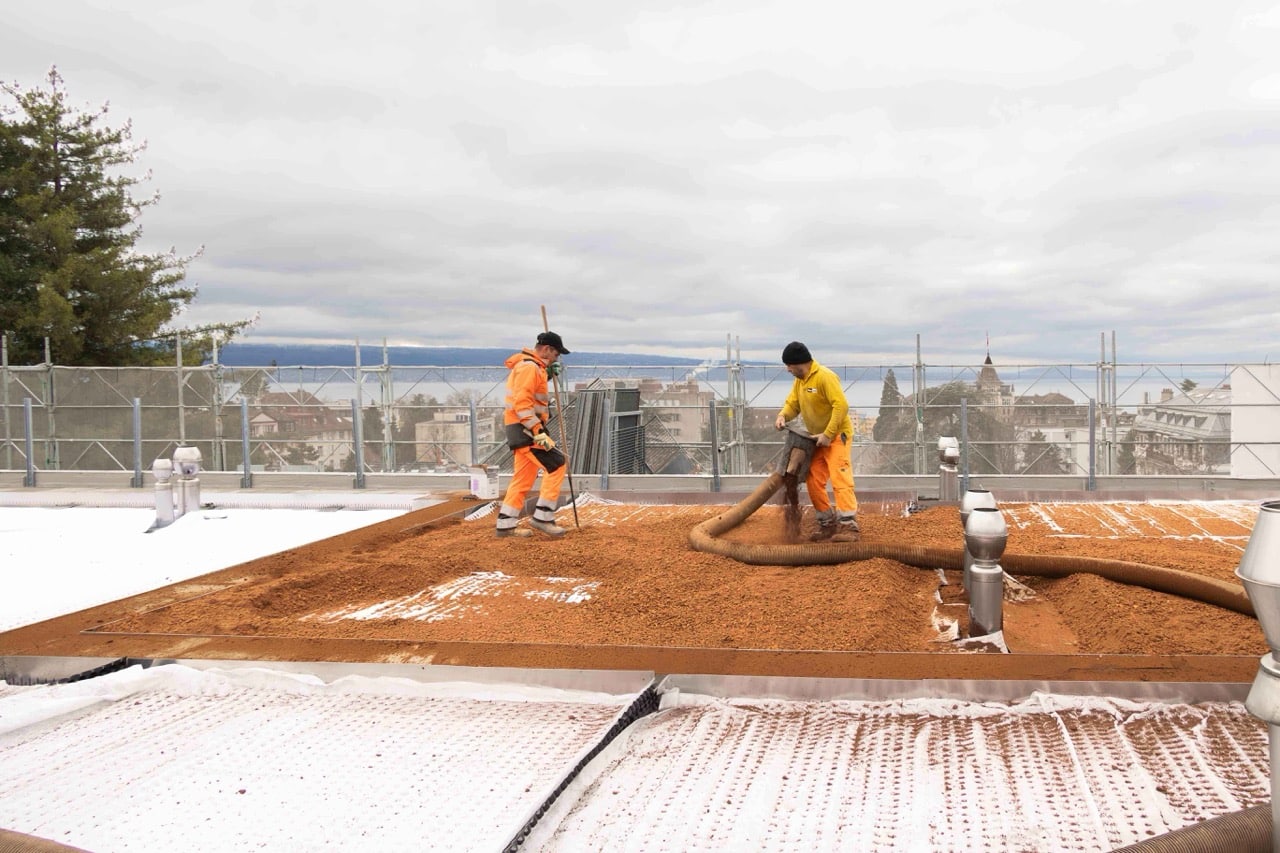
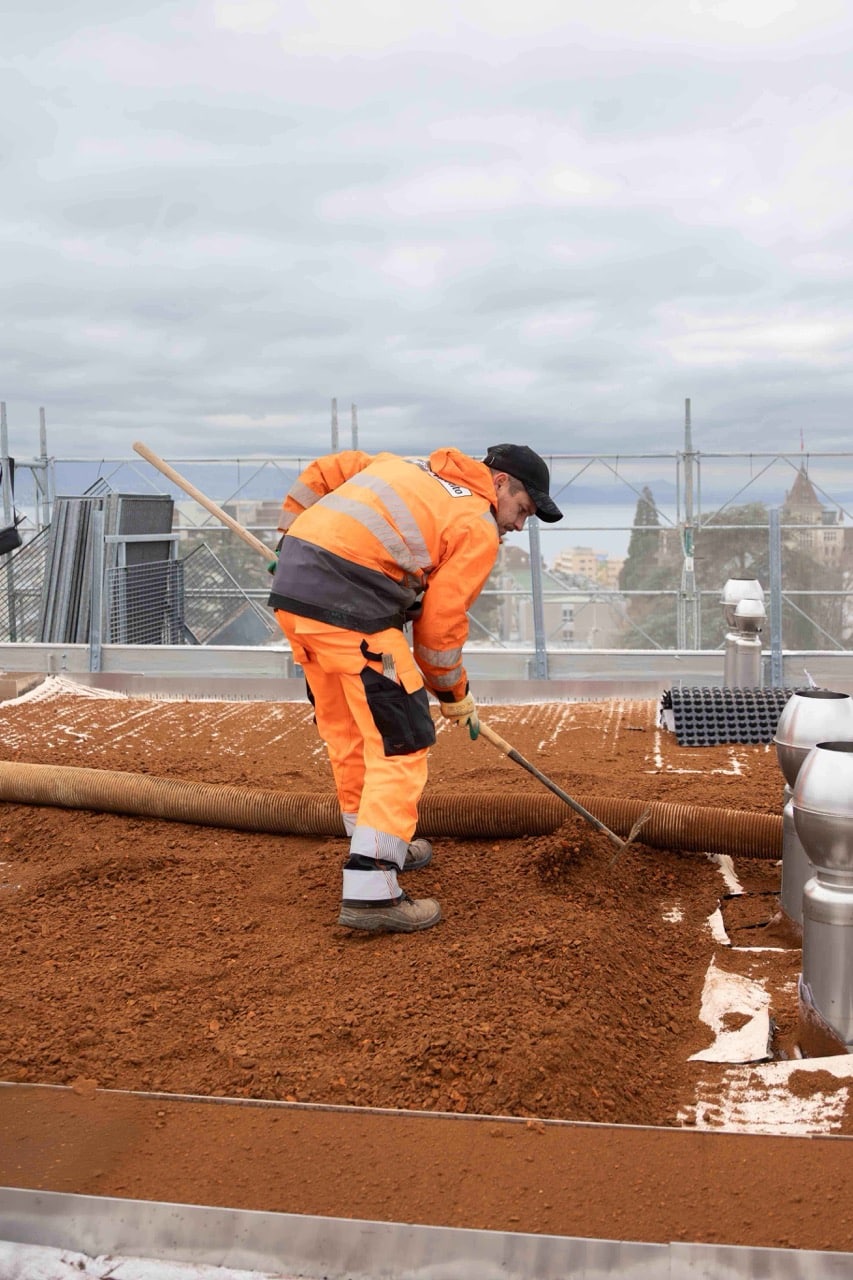
In the next step, the substrate was applied. A total of 600 m² of materials specially developed for extensive green roofs were used, tailored to the requirements of the city of Lausanne. The installation depth varies between 8 and 15 cm. These deliberately designed variations influence the water balance, nutrient availability, and root penetration, creating different vegetation zones. This results in drier and slightly moister areas where different plant species can establish themselves.
Material installation with the Hornet
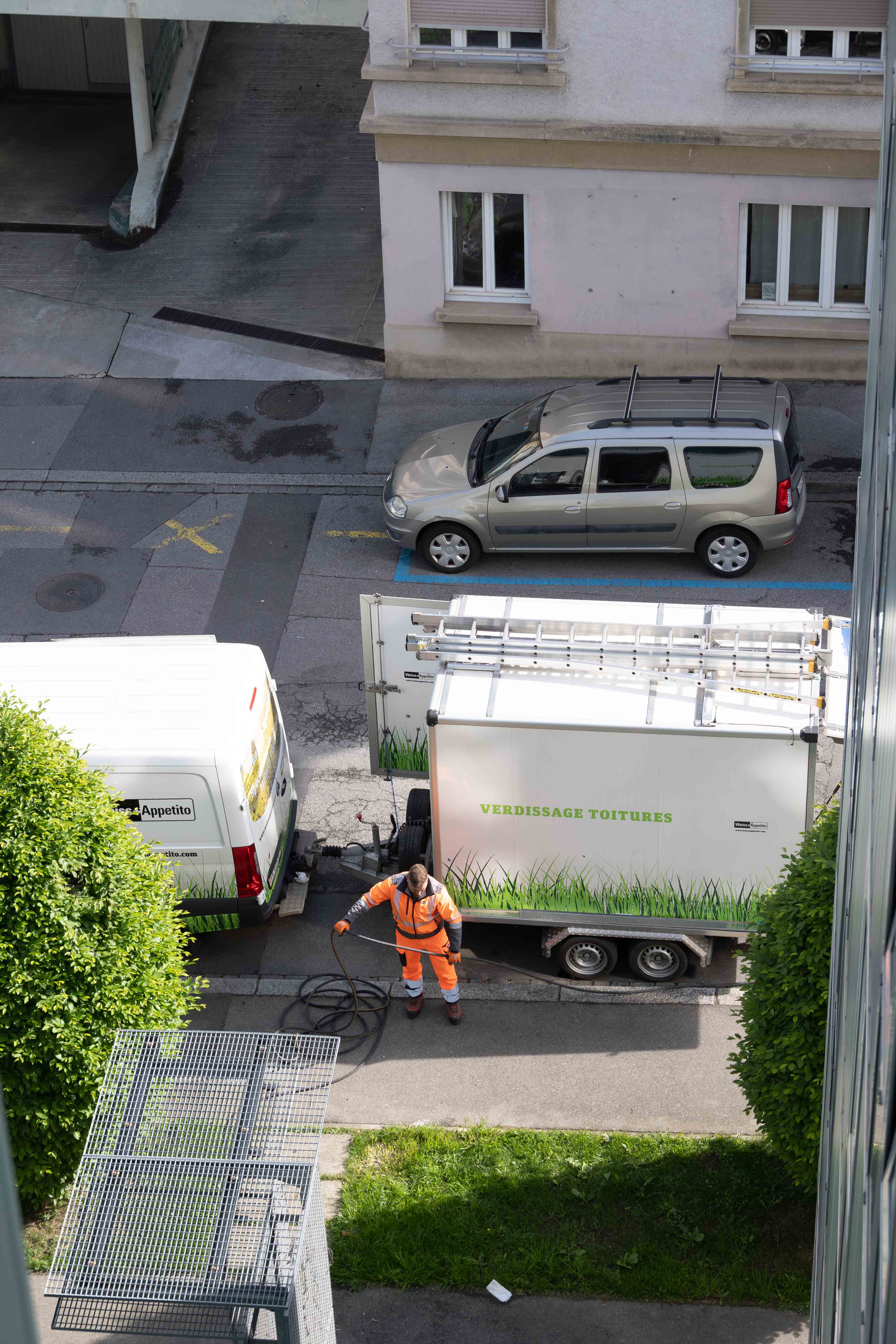
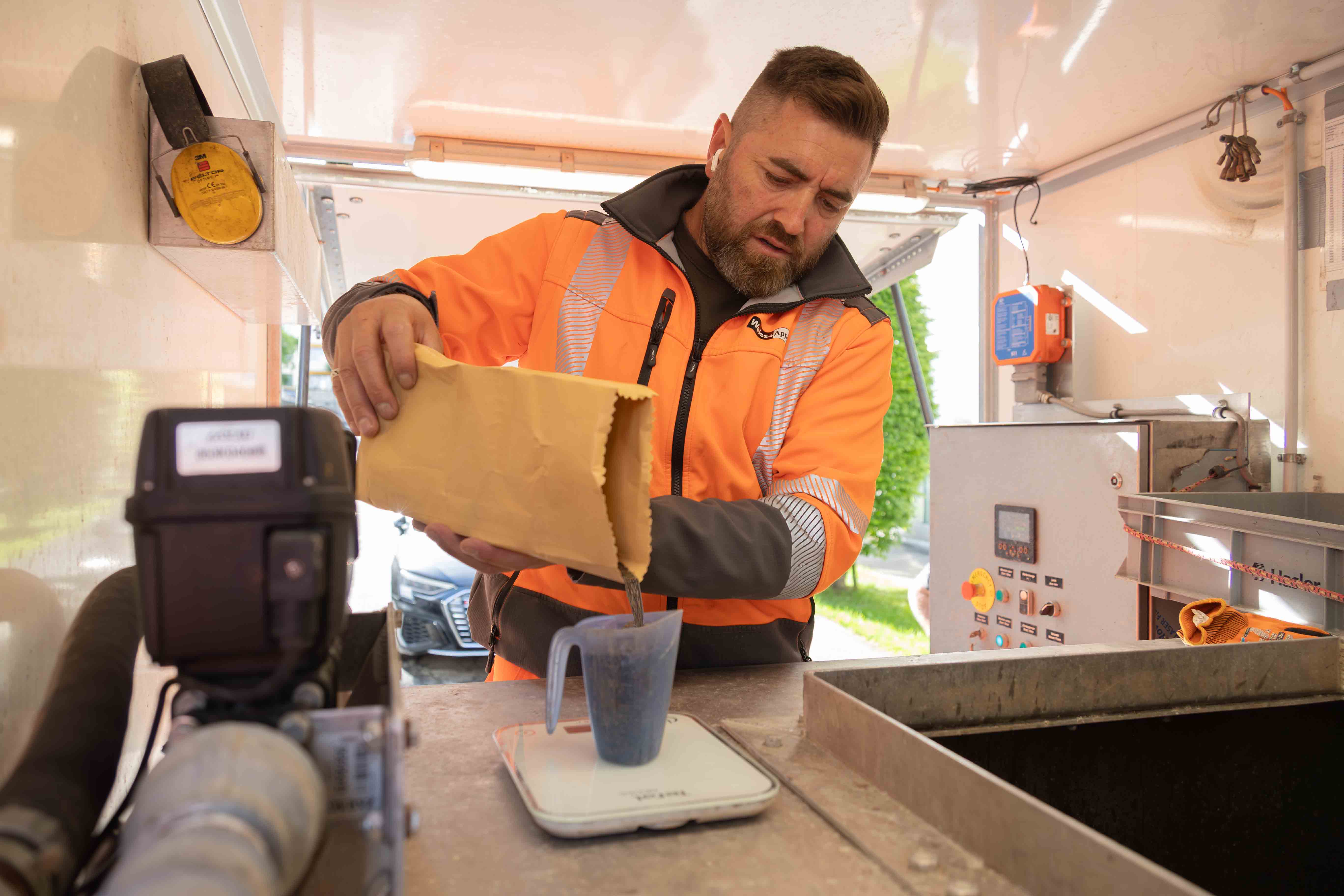
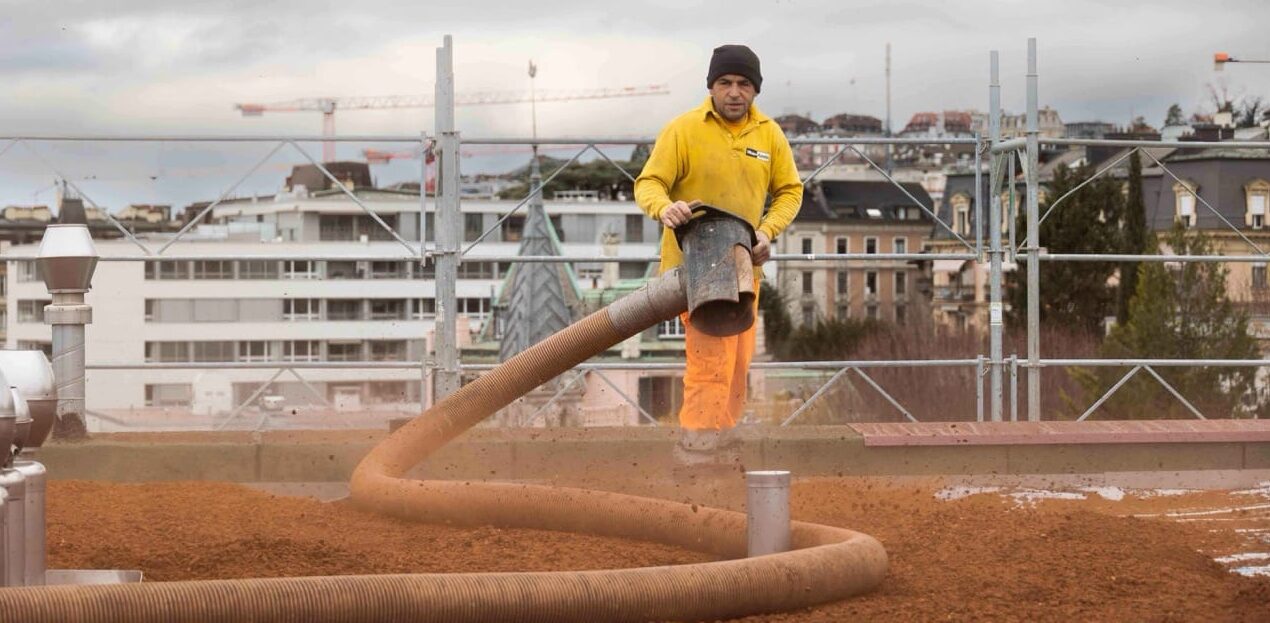
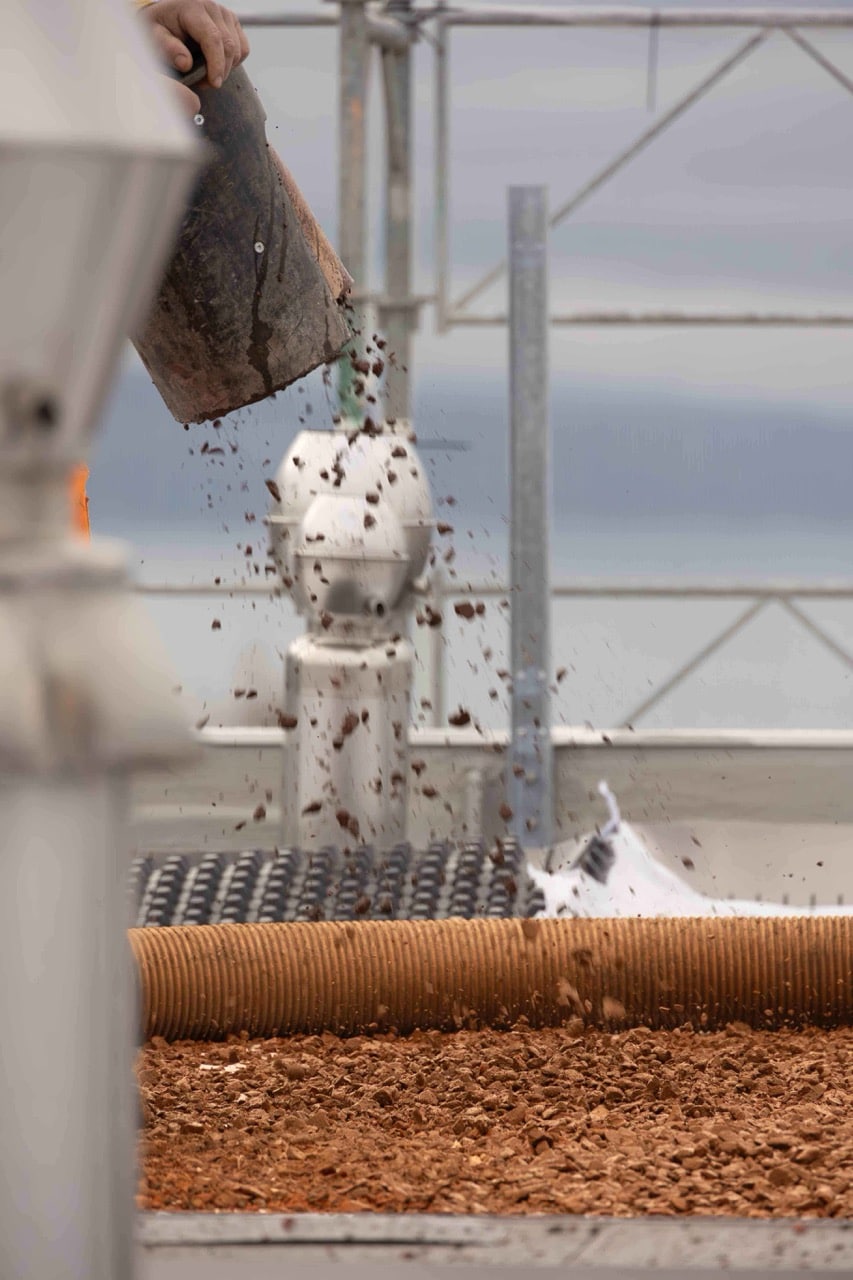
To transport the materials onto the roof, the Hornet was used, a custom-built machine for suctioning and blowing bulk materials. Our recycling substrate, rounded gravel, and the sand-gravel mixture come from the region and were specially processed for this project. The materials were conveyed pneumatically to the roof via hoses and placed directly into the designated areas. This method is precise, protects the roof surface, and makes the work easier, especially where space is limited.
Biodiversity zones for more structure
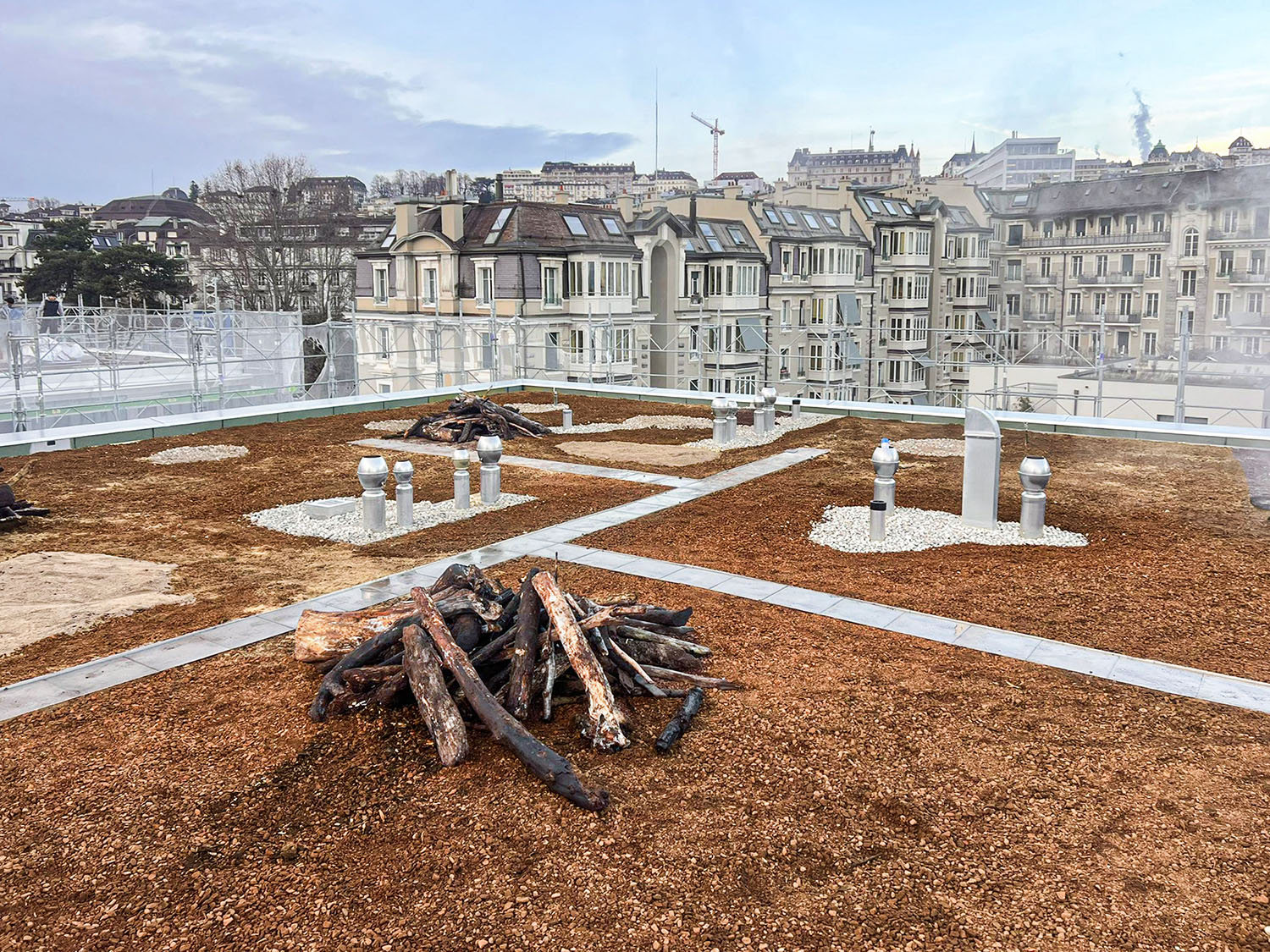
In addition to the substrate, biodiversity zones were purposefully created. For this purpose, round gravel and a sand-gravel mixture were installed in various areas of the roof surface. These mineral zones heat up faster, retain heat, and provide dry microhabitats. At the same time, they support surface drainage and ensure that water can run off in a targeted manner.
To further increase ecological diversity, several piles of deadwood and tree trunks were also placed on the roof area. These structures provide shelter for small creatures, serve as wind and shade breaks, and bring additional structure to the roofscape. Thus, the extensive biodiversity roof appears not only technically well-conceived, but also visually diverse.
Sowing and development of the extensive biodiversity green roof
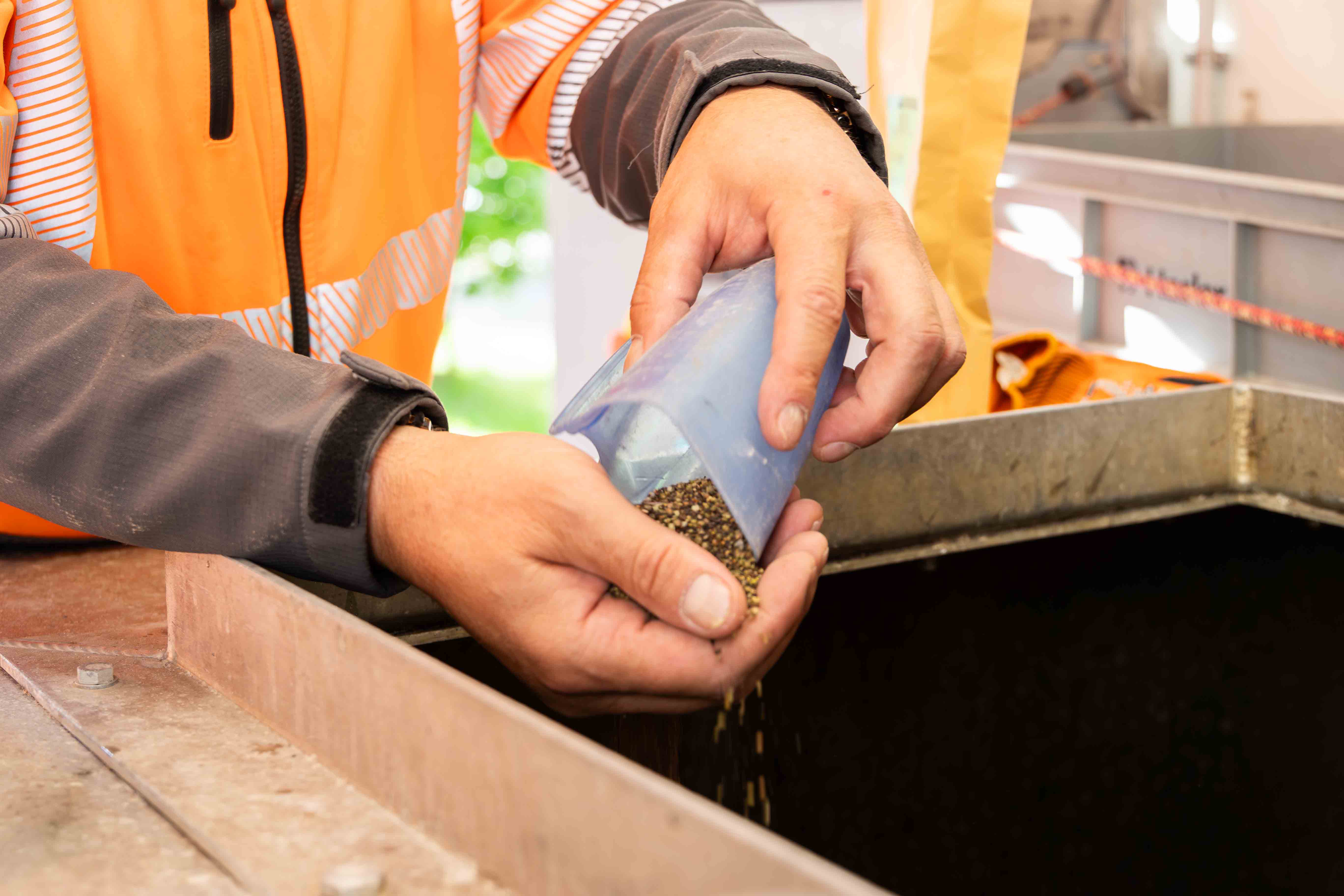
At the end of the construction work, the entire area was seeded. The seed mixture complies with the specifications of the OHS of the City of Lausanne and is tailored to the local climate. The seeding marks the beginning of the actual development phase of the extensive biodiversity green roof. Over the following months, a robust, site-appropriate vegetation will establish itself. It cools the roof surface, buffers precipitation, and provides long-term protection for the roof waterproofing against severe temperature and moisture fluctuations. At the same time, a species-rich habitat is being created in Lausanne that strengthens urban biodiversity and demonstrates the potential inherent in extensive biodiversity green roofs.