Cracks, peeling off of the surface and a driveway that has to withstand a lot every day. Therefore, more was needed at Worblaufenstrasse in Ittigen than just a new coating.
Before pure polyurethane could be applied using the hot-spray method, our renovation team first had to remove the existing concrete. Damaged areas were removed, including the upper reinforcement, the underlying ground prepared, and the ramp was rebuilt using a R4 high-performance concrete repair mortar.
Only after that did the visible completion of the renovation follow: the polyurea coating on the driving surface and the side mounts.
The basis for the membrane
A driveway is used every day; in addition, the curve profile of this driveway requires vehicles to steer, brake, and drive back again, often on the same short stretch of road. Over the years, this has added to the concrete, and water and salt have additionally penetrated into the fine cracks. This is relevant for a polyurea coating because the membrane only adheres as well as the surface below is capable of supporting it. Therefore, it was first necessary to completely assess the damaged areas in the concrete.
185 square meters under high pressure
On approximately 185 square meters, we removed the damaged concrete using high-pressure water jets to the top reinforcement. This process specifically removes the damaged material and leaves the viable substance behind. This is the foundation on which the subsequent polyurea layer must be applied. Additionally, Prima-Sol AG has sanded adjacent areas and prepared them for further work.
14 tons for a flat base
The exposed areas had to be reconstructed so that in the end a continuous, flat surface for the coating could be created. To achieve this, the team used 14 tons of R4 high-performance concrete repair mortar. Because the ramp has a curved shape and has side protrusions, every transition had to fit the existing shape. Only a flat, closed surface evenly applied the polyurethane coating.
Elastic, seamless, ready for immediate use
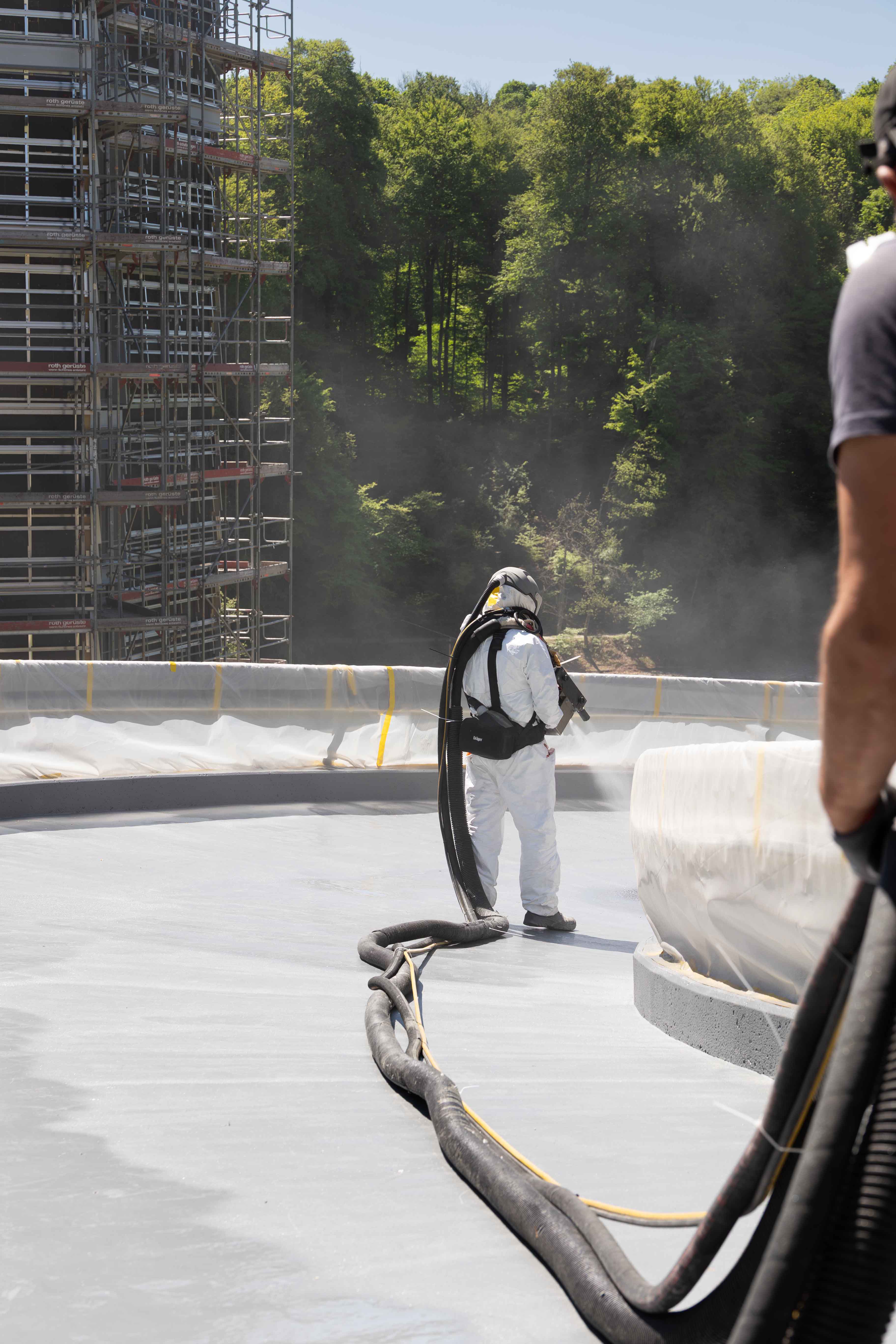
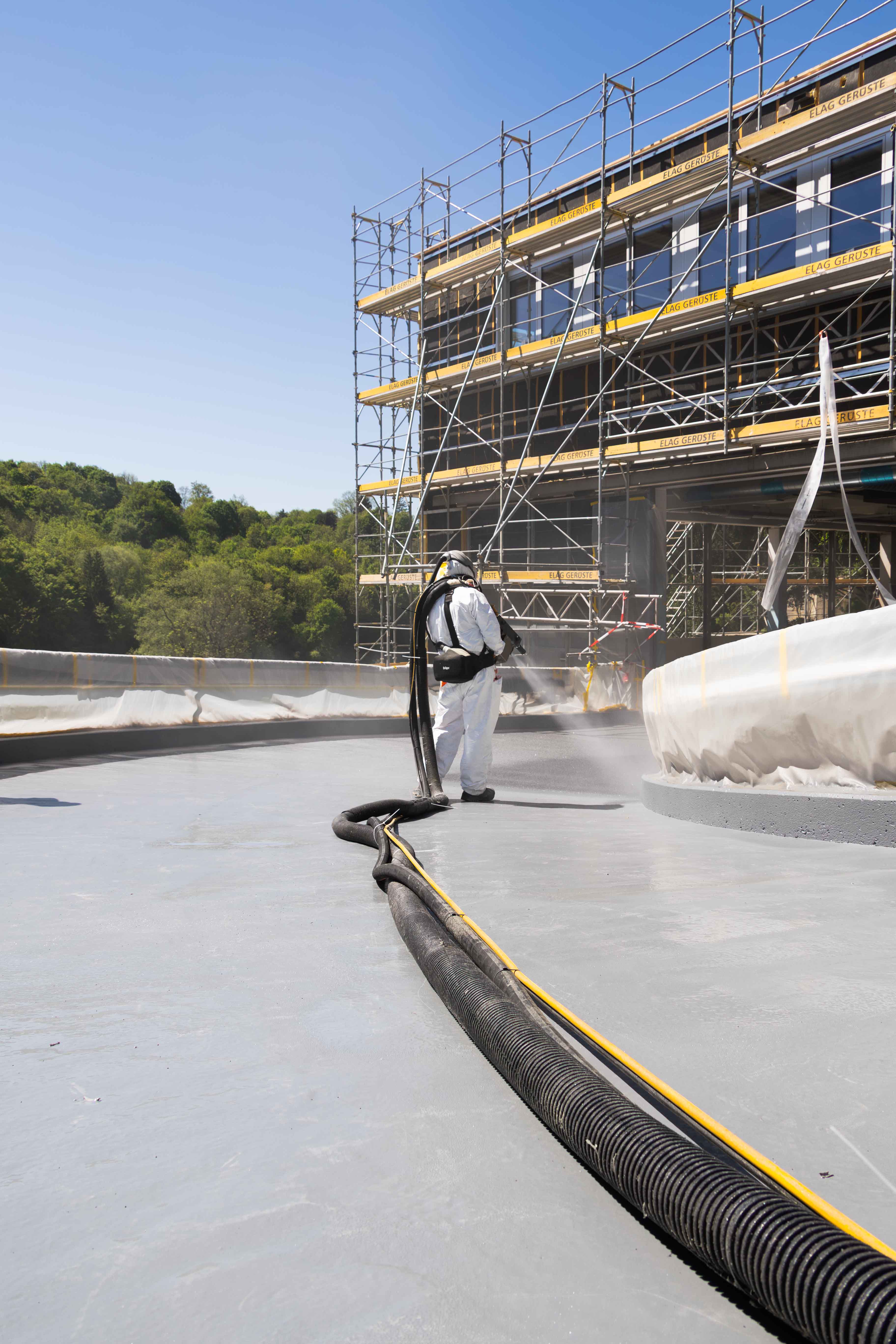
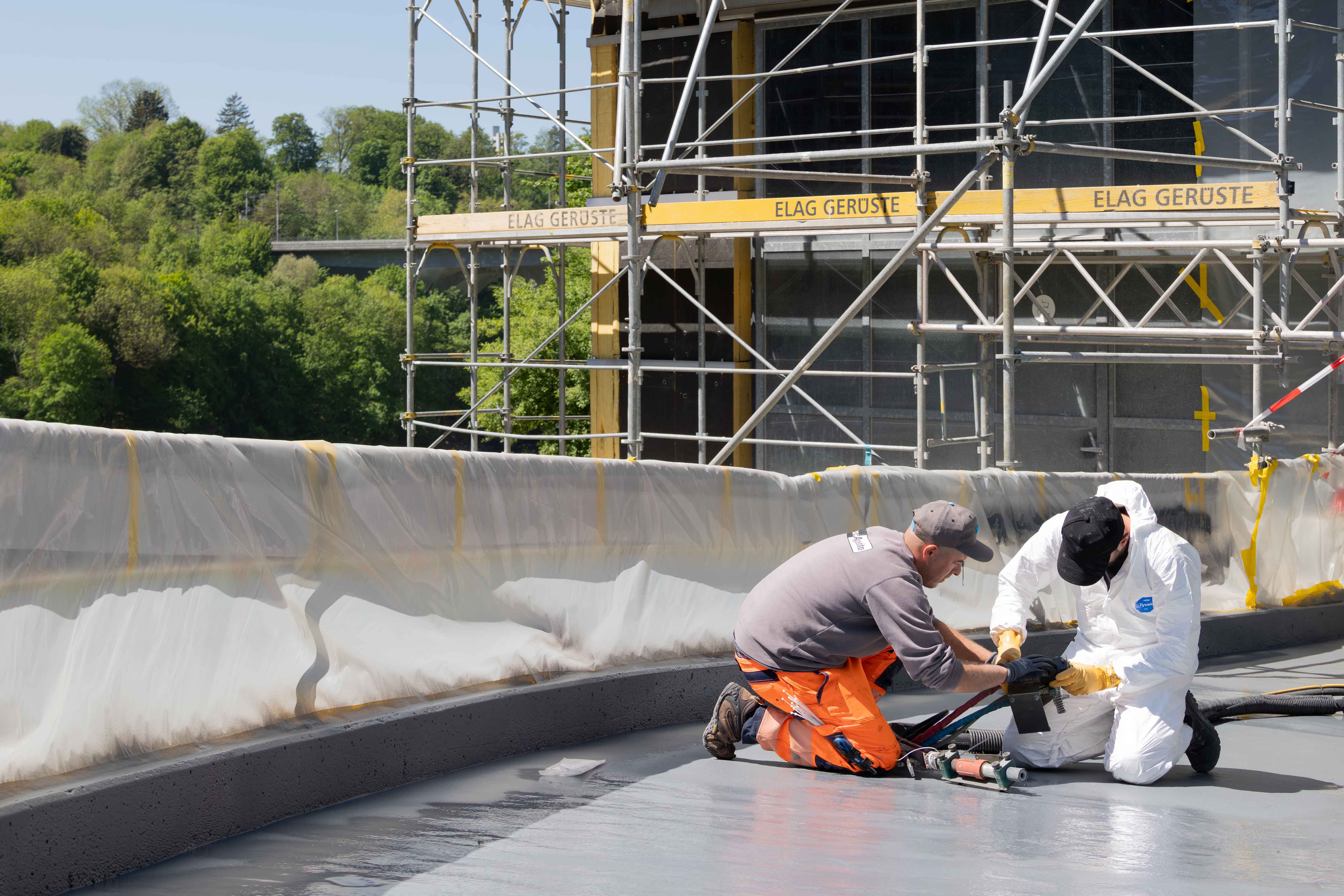
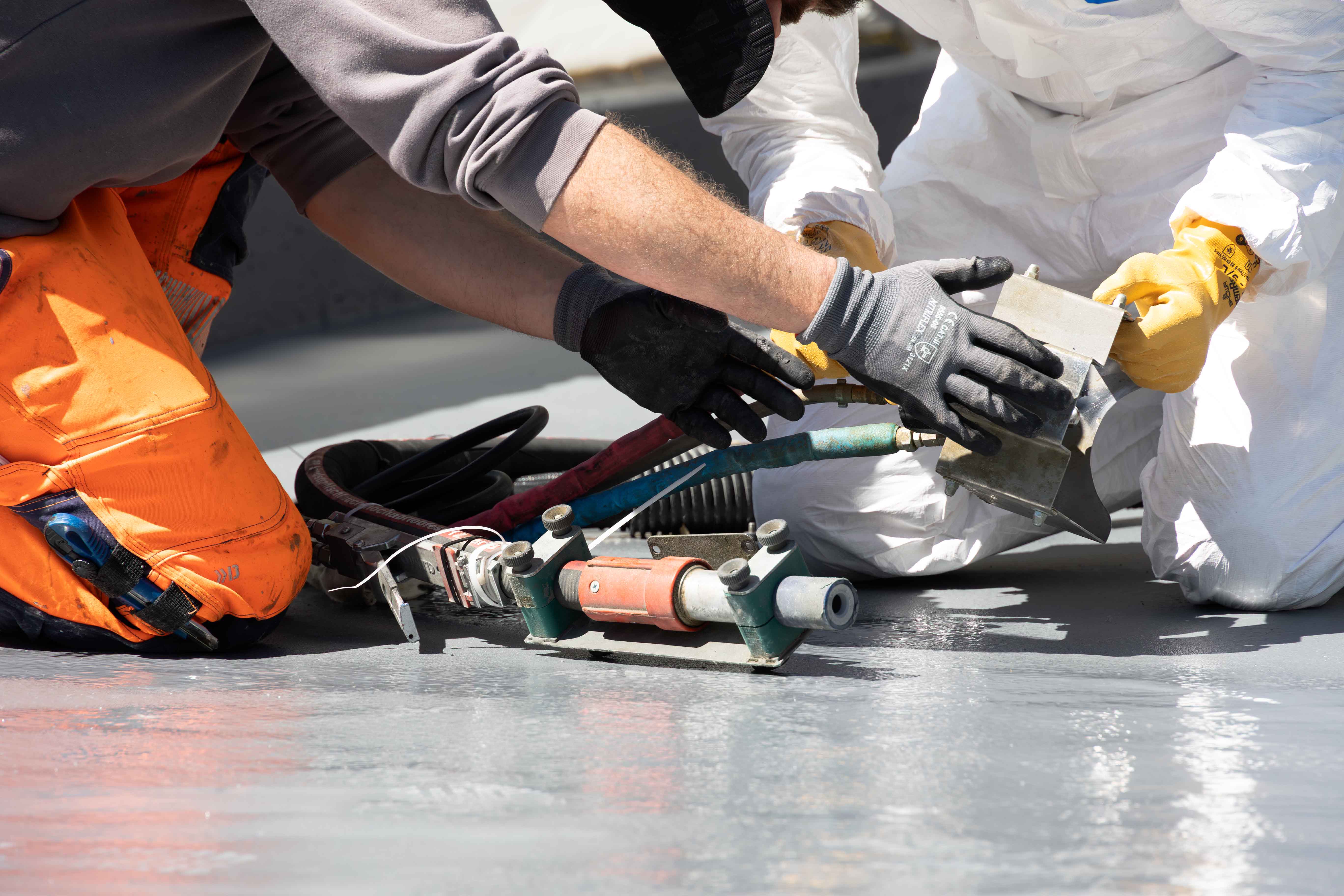
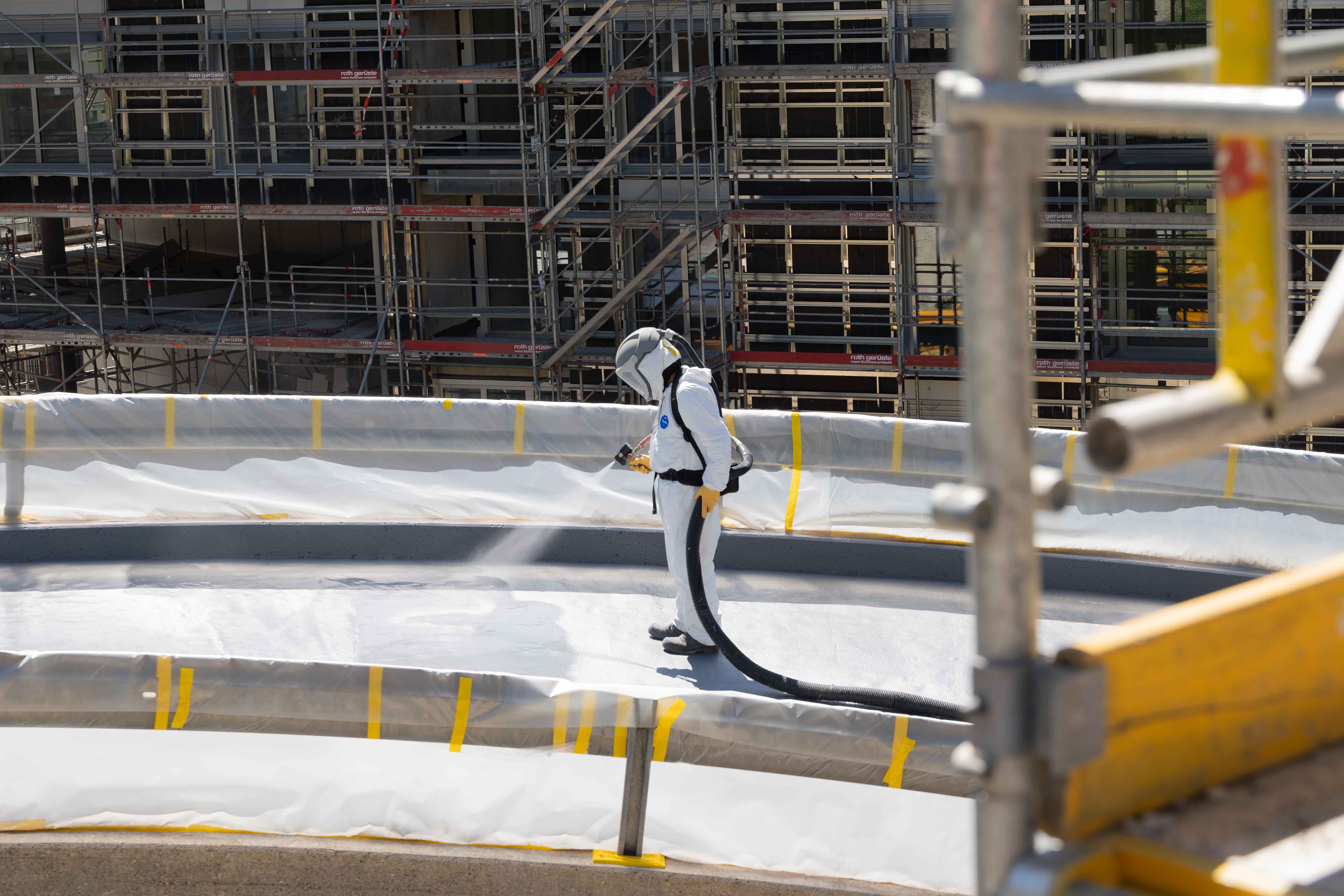
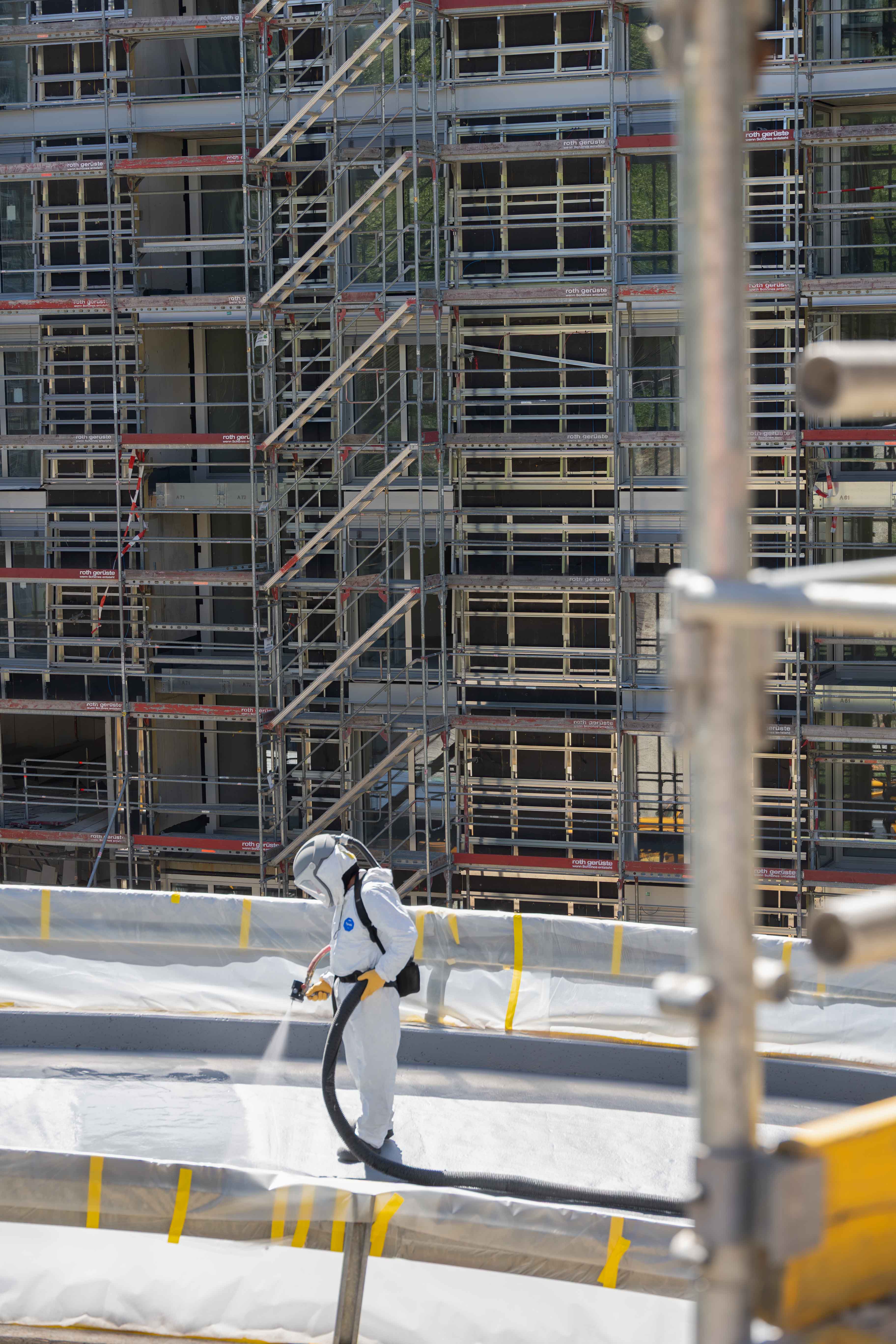
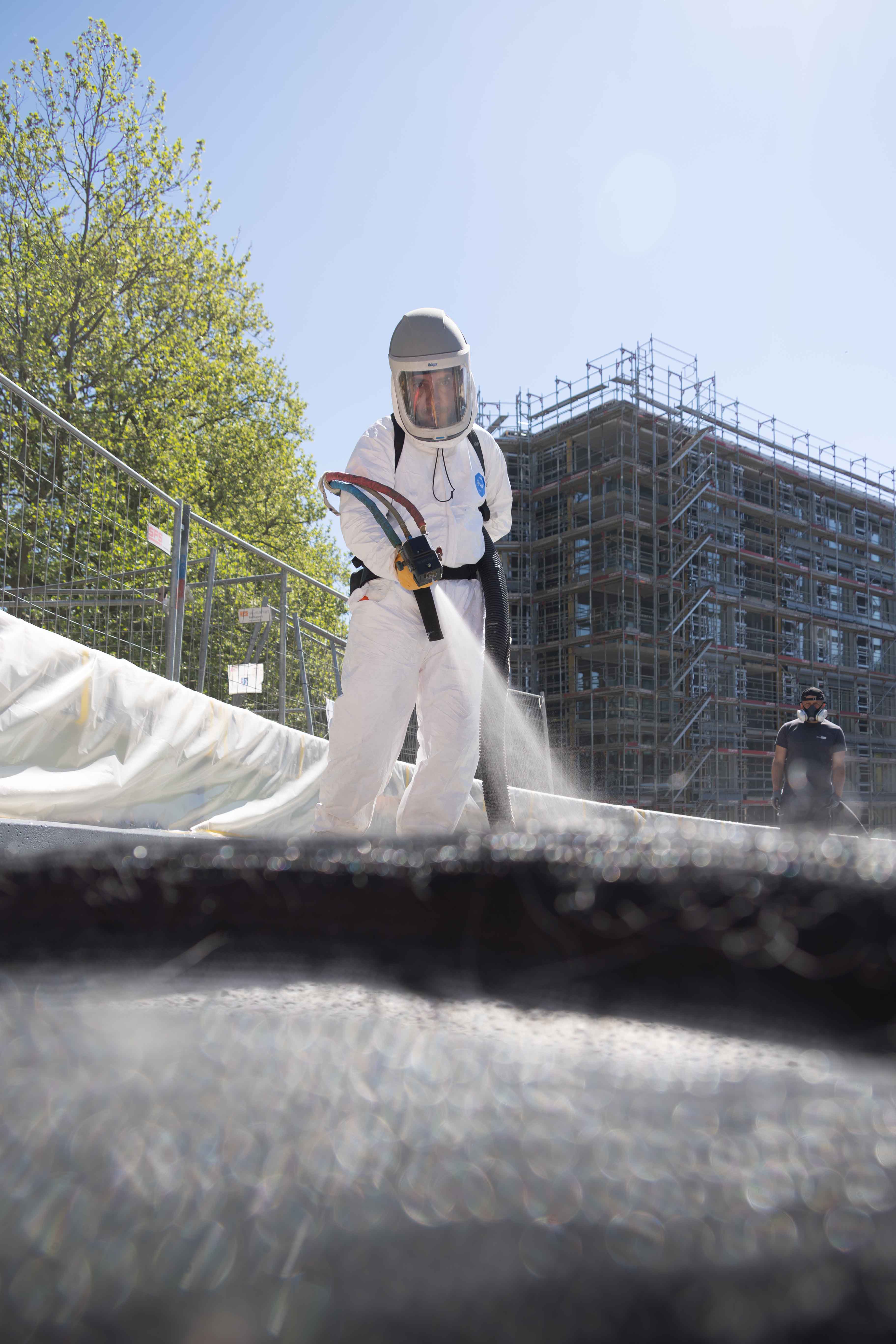
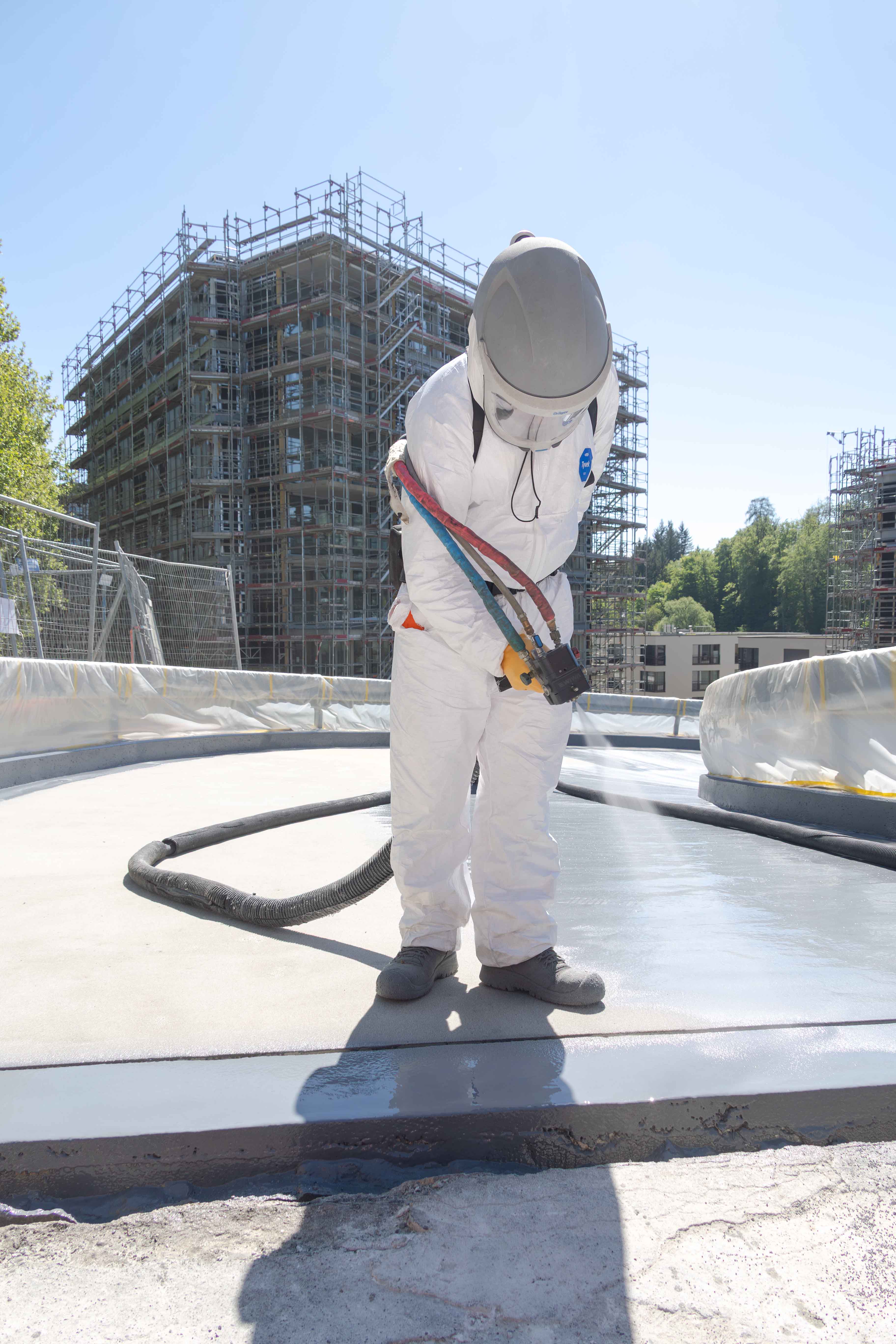
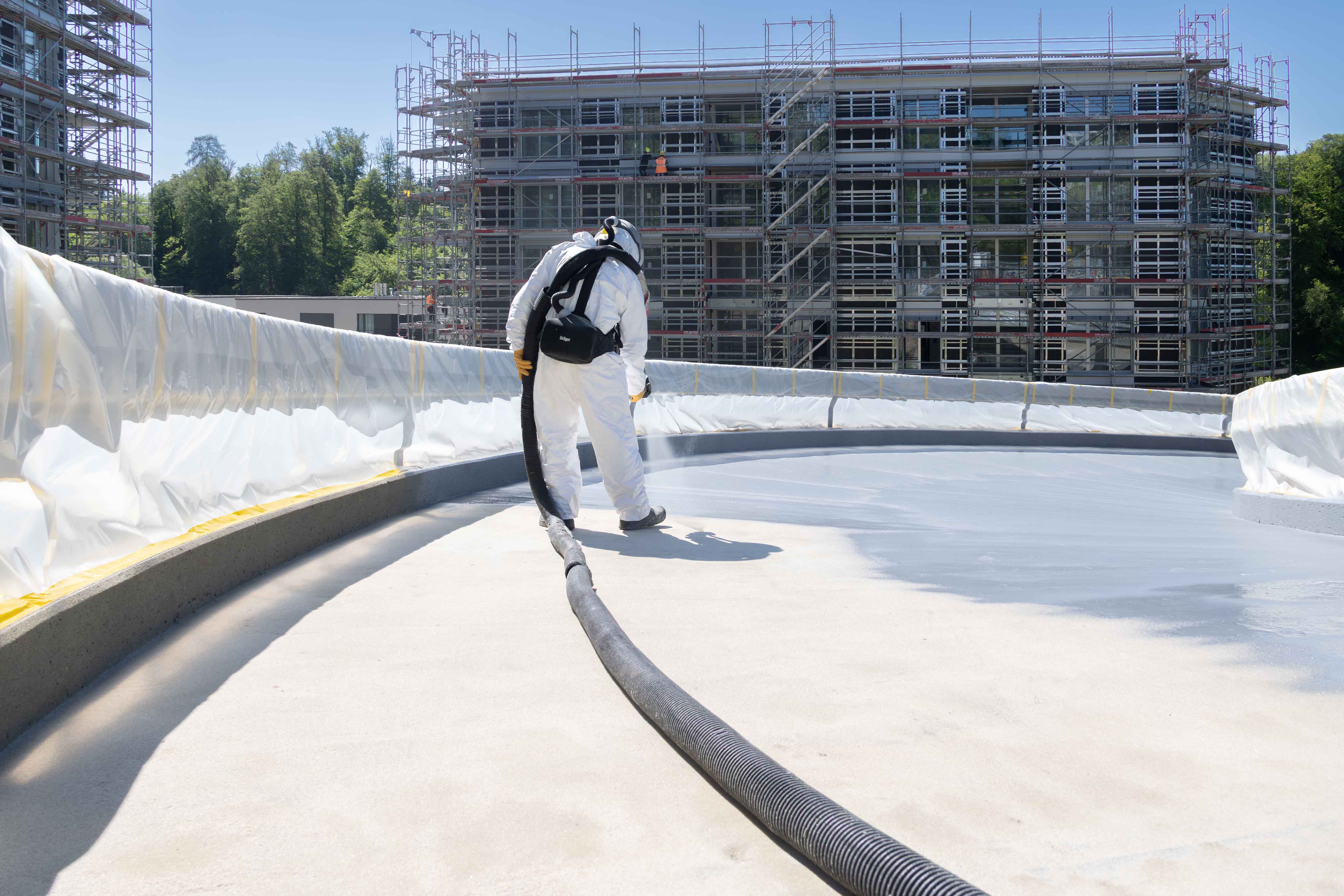
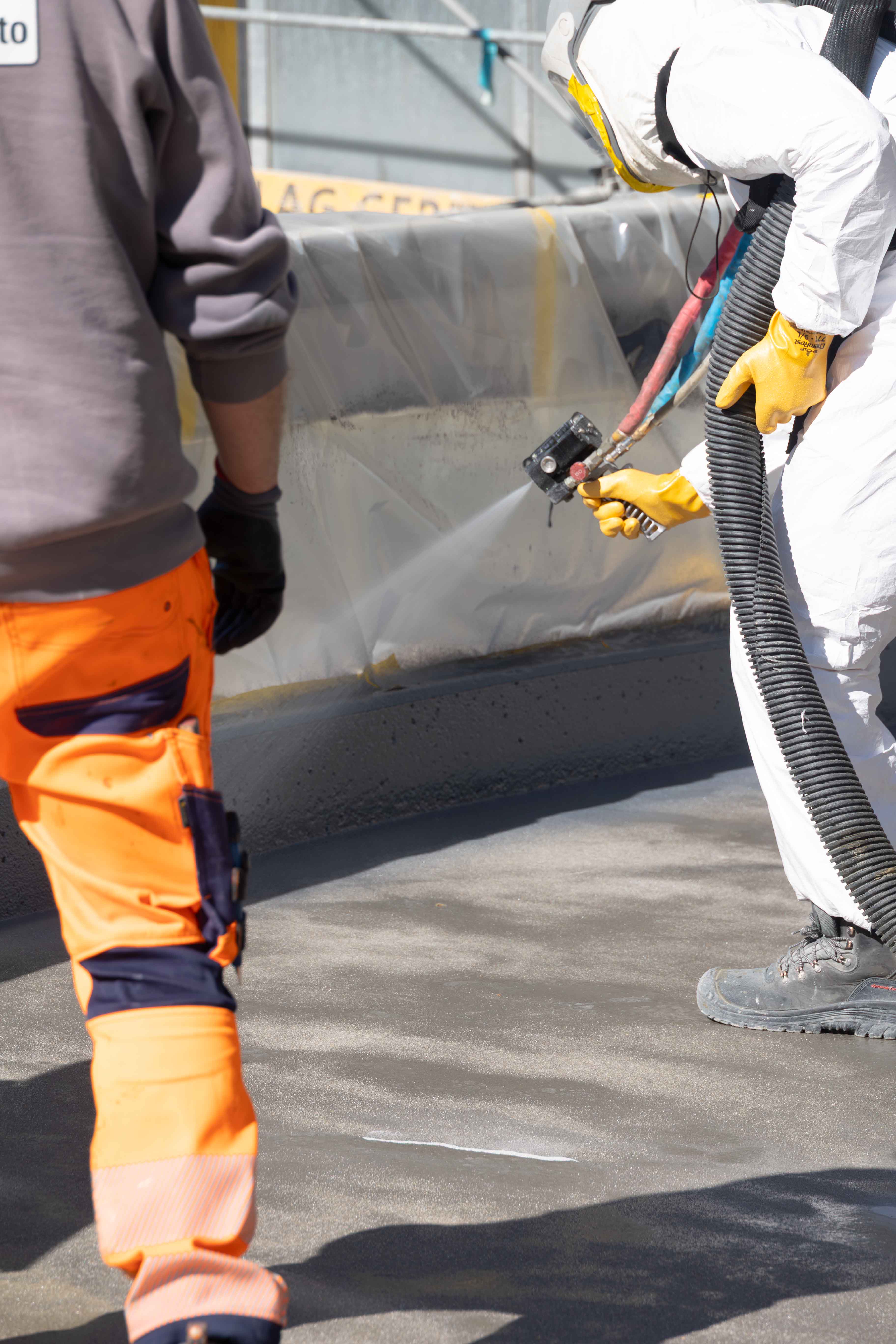
Next came the actual coating on the prepared surface. Around 200 square meters of floor area, including the supports, were coated with Polyurea using the high-pressure injection method. The material cures within seconds and forms an elastic, seamless membrane that also withstands minor movements in the substrate without causing any cracks.
This membrane meets the requirements for an OS 10 surface protection system for walkable, crack-bridging seals and goes beyond them in several respects, such as in terms of abrasion resistance and chemical resistance to oils, salt and tire wear. The material is also solvent-free to work with and remains functional even at temperatures ranging from around minus 30 to plus 100 degrees Celsius, which is directly relevant for an outdoor ramp that is laid in winter.
The rapid curing was not a side effect in this project; it was an important factor. The ramp had to remain closed during the work. The more quickly a layer could be processed, the shorter the waiting time for the users.
Even layer thickness despite the curve
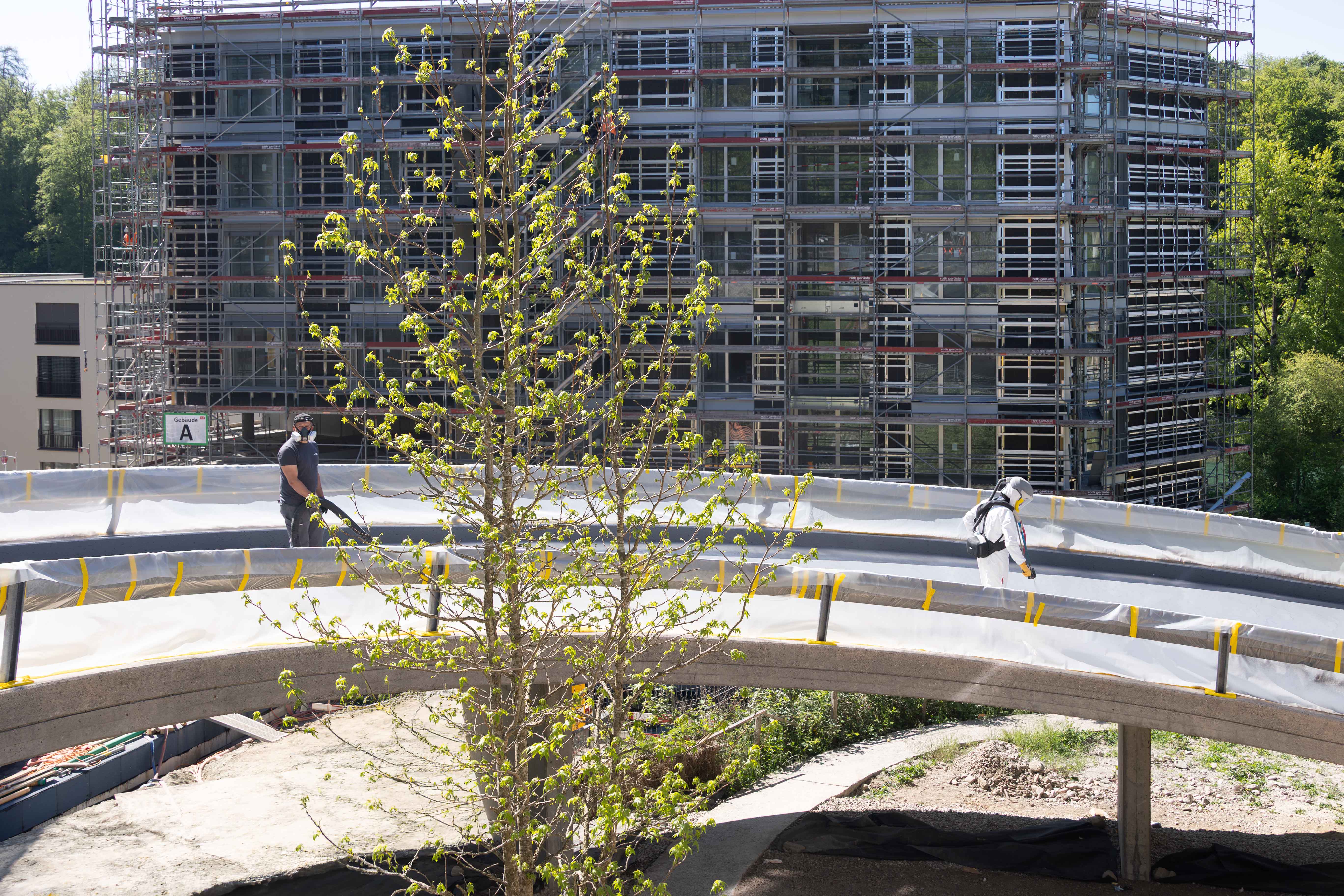
Unlike on a flat surface, when spraying a curved ramp the working direction changes continuously. The driving surface, the edge area and the steeper transitions at the mounting points require different angles, yet at the end of the process the same layer thickness must be applied everywhere. This is precisely where the meticulous attention to detail was required during this ramp renovation using Polyurea, a continuously uniform coating without thinner or thicker areas at the transitions.
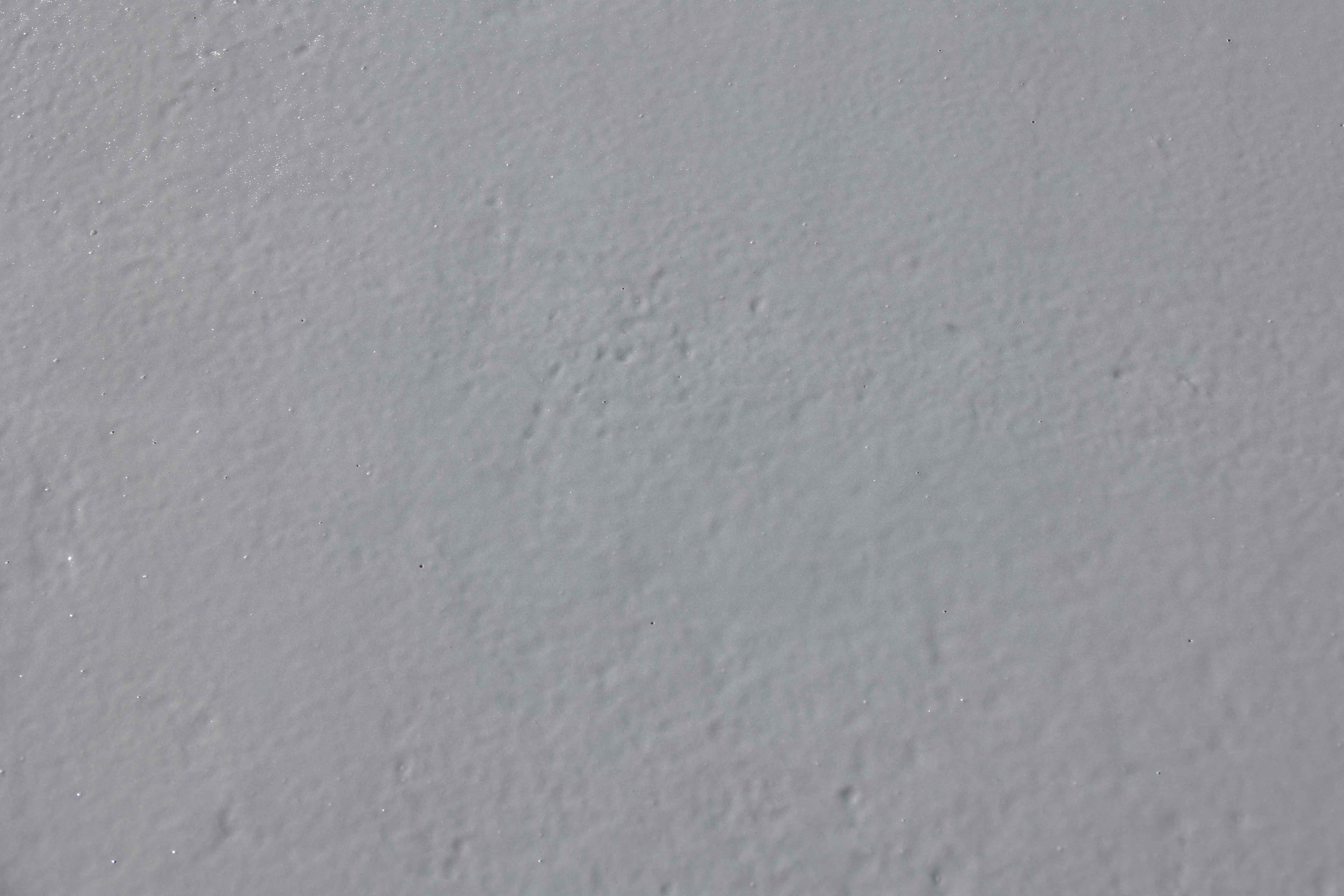
The finished Polyurea surface
The new polyurea layer was the final step, not the only one. Before that, the removal of 185 square meters of ground surface to the top reinforcement was carried out; after that, the new construction was carried out using 14 tons of R4 high-performance concrete repair mortar. Only on this basis was it possible to coat the surface in such a way that it achieved its full functionality.
For our team, this renovation of the ramp using Polyurea was a project where the preparation of the subsoil and the coating had to work in perfect harmony. A special thanks goes to the contracting authority, Kurth Architekten AG, and to the project management of AR Projektwerk for their excellent cooperation. The access road has now become a continuously protected roadway, which will now reliably carry the daily traffic in Ittigen.